
Meta title: DeWalt Circular Saw Cutting Tips | Blade Choice, Depth and Accuracy Guide
---
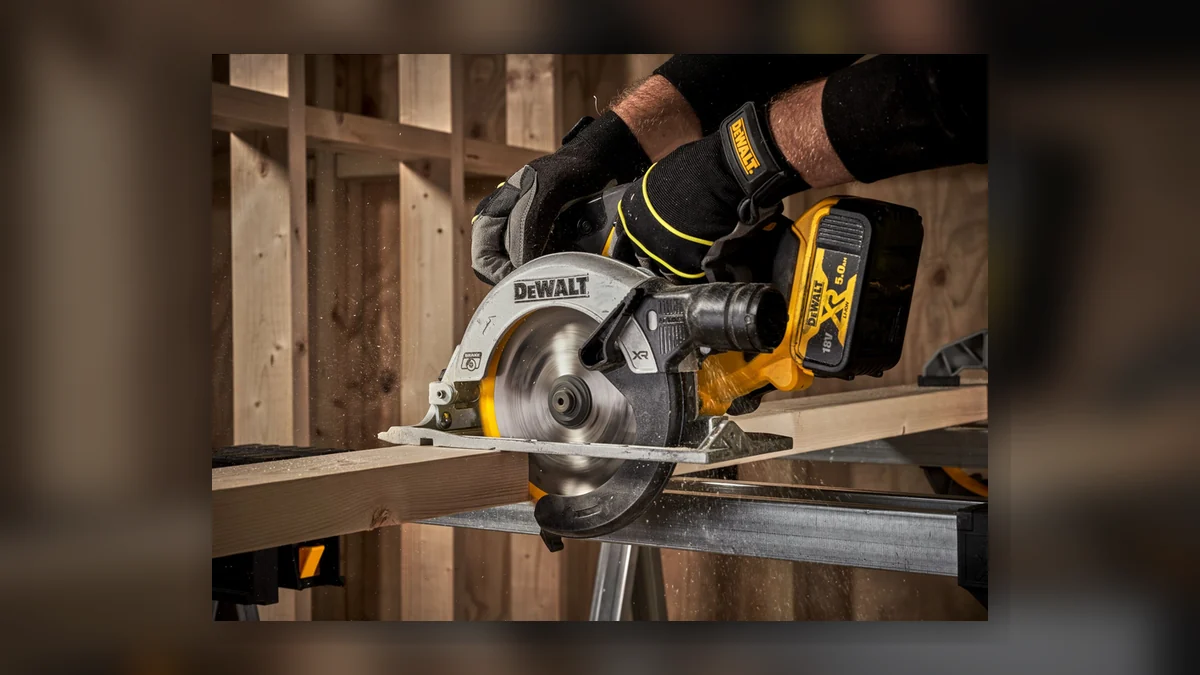
A circular saw is one of the fastest ways to ruin a job if you get the setup wrong and one of the most efficient tools on site when you get it right. These five tips apply to DeWalt circular saws across the range, whether you are using a corded model like the DWE550 or a cordless DCS570 on the 18V XR platform.
---
1. Choose the right blade for the material
This is the single biggest factor in cut quality, and the one that gets skipped most often. A circular saw blade is specified by its tooth count and tooth geometry, and the difference in result between a wrong blade and the right one is dramatic.
As a working guide:
- Fewer teeth (16 to 24): Fast, aggressive cuts through structural timber and framing lumber. The cuts are rougher but the blade works quickly and does not overheat on thick stock. Think of it as a blade for speed.
- More teeth (40 to 60): Slower, cleaner cuts for sheet materials, MDF, plywood face veneers, and anything where the finished edge will be visible. Each tooth takes a smaller bite, leaving a smoother result.
- TCT (tungsten carbide tipped) blades: Standard for UK professional use across most materials. Harder teeth stay sharp longer than steel, especially on abrasive materials like OSB and fibre cement.
If you are cutting kitchen worktop or melamine-faced board, a 60-tooth TCT blade with alternate top bevel (ATB) geometry will give you a virtually tear-free edge. If you are ripping 47x100mm structural timber all day, a 24-tooth ripping blade will be faster and last longer.
2. Set the blade depth correctly
The blade should protrude roughly 5 to 10 millimetres below the bottom of the material you are cutting. No more than that.
The reason this matters: when the blade protrudes too far, more of the blade is exposed below the cut. That increases kickback risk if the blade catches, and it also puts more heat into the cut because the blade is working through more material than necessary.
A quick way to check: hold the saw next to the material with the blade guard retracted, set the base plate flush with the surface, and adjust until you can see about half a tooth depth clearing the bottom. Lock it there.
On a DeWalt circular saw, the depth adjustment lever is typically on the rear of the base plate. Loosen, set, lock. It takes about ten seconds and it makes a measurable difference to both accuracy and safety.
3. Use a straight edge guide
Freehand circular saw cuts rely on a steady hand and a clear sight line to the kerf mark. In clean workshop conditions that is manageable. On site, with wind, noise, and awkward positions, it is not reliable.
A straight edge clamped to the workpiece eliminates the variable. For a DeWalt saw, the base plate edge sits at a set distance from the blade, known as the offset distance. Measure that distance, clamp your straight edge that far from your cut line, and the base plate rides against it for the full length of the cut.
DeWalt makes a dedicated rip fence and guide track system for their circular saws, but even a piece of straight timber will do the job. The result is a machine-straight cut that you can repeat accurately all day.
4. Mark the line clearly and on the right face
Tear-out happens on the upward stroke of the blade. In a circular saw, that means the top surface of the material gets the rougher exit cut and the bottom surface gets the cleaner entry cut.
If the visible face of your material needs to be clean, cut with that face down. If you are cutting a worktop that will be seen from above, either cut face-down or use masking tape along the cut line on the face side to reduce tear-out.
Mark your line with a sharp pencil or marking knife, not a felt tip, which gives a fuzzy line that is hard to align accurately. Some tradespeople use a utility knife to score lightly along the cut line before sawing, which gives a clean shoulder for the blade to follow on thin veneers or melamine.
5. Let the blade reach full speed before entering the material
This one is straightforward but frequently ignored. Starting the cut before the blade has reached running speed increases the load on the motor, slows the initial cut, and increases the risk of the blade grabbing.
Start the saw, let it reach full speed (this takes less than a second on a DeWalt cordless at full charge), then feed it into the material at a steady pace. Keep the pace consistent throughout the cut. Forcing the saw through faster than the blade speed allows produces a rougher cut and trips the overload protection on cordless models.
On cordless saws, particularly the DeWalt 18V XR and 54V FlexVolt models, the electronic motor management does a good deal of work to maintain speed under load. You can hear when the saw is working too hard because the pitch drops. If that happens, ease back slightly rather than pushing through.
---
Quick reference: DeWalt circular saw blade depths at 90 degrees
| Model | Blade size | Max cutting depth (90 deg) | |---|---|---| | DCS565 | 165mm | 55mm | | DCS570 | 184mm | 65mm | | DCS575 | 190mm | 67mm | | DWE550 (corded) | 184mm | 66mm |
All depths given at 90 degrees. At 45 degrees the maximum depth reduces to roughly 45mm depending on model.
---