Sources
- ## Introduction
- There is a corner of the tool kit that most tradespeople do not spend much time thinking about: pliers. They are bought once, usually in a bundle, often end up on the van floor, and are expected to work indefinitely. But ask any electrician or plumber who has spent time working in tight back-boxes, cramped meter cupboards or inside conduit runs, and they will tell you that the quality of the plier in your hand genuinely changes how fast and cleanly the job gets done.
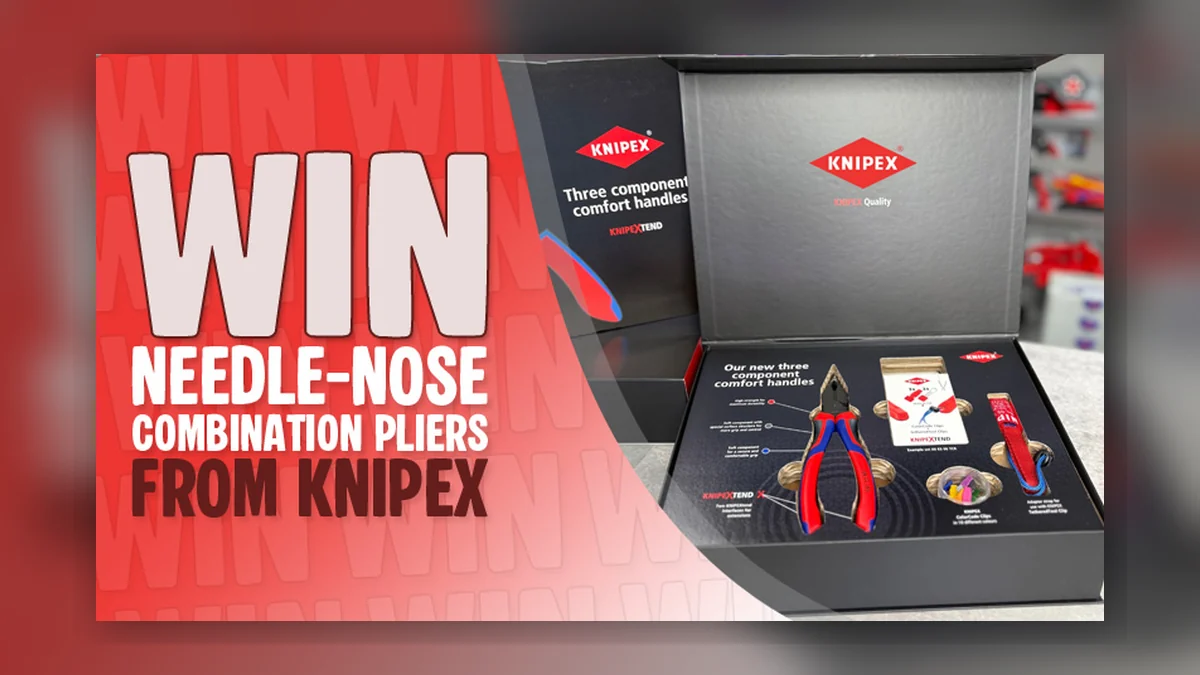
- KNIPEX has been manufacturing pliers in Wuppertal, Germany since 1882. The company makes one thing: pliers and cutting tools. That focus shows in the engineering. The needle-nose combination plier is one of the most versatile tools in the KNIPEX range and one that earns its place on a wide range of different trades.
- ## What Needle-Nose Combination Pliers Actually Do
- Combination pliers handle three tasks in one tool: gripping flat surfaces, gripping round profiles like pipes and conduit, and cutting wire. The needle-nose variant extends the jaw into a tapered point, which adds a fourth capability: reaching into confined spaces where a standard combination jaw cannot fit.
- On an electrical job, that might mean reaching into a deep back-box to pull a cable end forward, bending a conductor into a terminal loop, or holding a small component while a screwdriver drives the fixing. On a plumbing job, the tapered nose can reach into tight pipe runs or manipulate olives and fittings that a thumb and finger cannot access comfortably.
- The combination of gripping, bending and cutting in a single tool is what makes pliers reach-for-first tools rather than secondary items. For a tradesperson working out of a belt pouch or a small tool roll, a single high-quality pair of combination pliers can replace three separate tools.
- ## What Makes KNIPEX Pliers Different
- KNIPEX makes its pliers from chrome vanadium steel, which is the same material class used for quality spanners and socket sets. Chrome vanadium is harder and tougher than standard carbon steel, meaning the cutting edges hold their sharpness longer and the jaws resist deformation when gripping hard materials.
- The cross-cutting profile on KNIPEX combination pliers is induction hardened to around 64 HRC (Rockwell hardness). To put that in practical context: a standard nail is around 55 to 58 HRC. The KNIPEX cutting edge is meaningfully harder than the materials it is cutting, which is why the edges do not blunt after a few months of cable work the way cheaper pliers do.
- The handle design on current KNIPEX models uses a dual-component grip with a slip guard, which matters when hands are wet or when the job involves cutting live-adjacent cables where a firm grip is not optional.
- ## Who Should Be Using Needle-Nose Combination Pliers
- **Electricians** are the core user. Back-box work, consumer unit wiring, cable terminations and conduit runs all benefit from a tapered-nose tool.
- **Plumbers** working on compression fittings in tight airing cupboards or under-sink spaces use them for holding small fittings while threading connectors.
- **General builders and joiners** working on ironmongery, hinges and hardware often use them to hold nails, bend tie wire, or grip awkward fixings during installation.
- **Heating engineers** find them useful when manipulating clip-on components on manifold systems or reaching into boiler casings.
- ## How to Choose the Right Size
- KNIPEX needle-nose combination pliers are typically available in 140mm, 160mm and 200mm overall lengths. The length refers to the full tool from handle end to tip:
- **140mm:** compact option for working in very tight spaces, lower cutting force
- **160mm:** the most common trade choice; good balance of reach, grip and cutting leverage
- **200mm:** more leverage and grip strength, useful when cutting heavier cable or when grip strength on larger conductors is needed
- Most electricians carry a 160mm as their standard and occasionally reach for a 200mm for heavier work.
- ## Caring for Your Pliers
- KNIPEX pliers require minimal maintenance. A light wipe with an oily cloth every few months prevents surface rust at the joint, which is the point most likely to corrode if the tool is regularly exposed to damp. The pivot on KNIPEX tools is riveted and does not need re-tightening, but if the joint starts to feel stiff, a single drop of light oil will clear it.
- Do not use combination pliers on fasteners that should be turned by a spanner. Using pliers on hex heads rounds the corners and damages both the fastener and, over time, the plier jaws. Pliers grip; they do not torque. That is what spanners are for.
- ## Frequently Asked Questions
- **What is the difference between combination pliers and needle-nose pliers?**
- Standard combination pliers have a wider, box-shaped jaw designed for gripping flat, round and hexagonal profiles. Needle-nose combination pliers taper the jaw to a narrower point, adding the ability to reach into confined spaces. Both include a wire cutter in the jaw profile. Needle-nose combination pliers are the more versatile of the two for trade work where confined access is common.
- **Are KNIPEX pliers made in Germany?**
- Yes. KNIPEX manufactures all its pliers at its plant in Wuppertal, Germany. The company has manufactured pliers there since 1882 and does not use overseas production facilities for its core product range.
- **What does chrome vanadium steel mean for plier quality?**
- Chrome vanadium (Cr-V) steel is an alloy used for high-quality hand tools because it combines good hardness with toughness. It resists cracking under impact and holds a sharp edge longer than standard carbon steel. For plier cutting edges, this means the wire cutters stay sharp through significantly more use before any sign of dulling.
- **Can KNIPEX pliers cut steel wire?**
- Yes. KNIPEX combination pliers are designed to cut soft wire, copper cable and standard steel tie wire. They are not rated for spring steel or piano wire, which requires specialist cutting tools. For heavy structural steel wire, a bolt cutter or cable cutter is the appropriate tool.
- **What length of needle-nose combination pliers should an electrician buy?**
- The 160mm length is the standard trade choice for most electrical work. It fits comfortably in a belt pouch, provides enough jaw leverage for cutting 2.5mm2 cable cores cleanly, and reaches adequately into standard back-box depths. A 200mm pair is worth carrying as a secondary tool for heavier gauge cable or where more gripping force is needed.
- **How long do KNIPEX pliers last?**
- With normal trade use, a quality pair of KNIPEX pliers should last many years. The company provides a lifetime guarantee against manufacturing defects. The cutting edges are the component most likely to show wear first; when the wire cutter starts to tear rather than cut cleanly, it is usually time to replace the tool rather than sharpen it, as induction-hardened edges are not designed for re-grinding in the field.
- KNIPEX UK
- Professional Builder June 2026 coverage