Makita's 18V LXT battery platform is one of the most widely used cordless systems in UK trades, and the range of available batteries has grown significantly. Walk into any good stockist and you will find at least four or five capacity options, all from 18V, all the same voltage, all fitting the same tools.
So what is the difference, and which one should you actually buy?
---
What Ah Means (and What It Does Not)
Ah stands for ampere-hours. It is a measure of how much energy the battery stores, not how powerful the tool is.
Think of the battery like a fuel tank. A 2.0Ah battery is a small tank and a 6.0Ah battery is a large tank. Both run the same engine, in the same way. A 6.0Ah battery does not make an impact driver hit harder than a 2.0Ah battery. What it does is run the driver for three times as long between charges.
The voltage (18V) determines power. The Ah determines runtime. This is the single most important thing to understand about battery specifications.
---
The Makita 18V LXT Battery Range
2.0Ah
The 2.0Ah battery is the smallest and lightest in the range. It weighs around 350g, which makes a meaningful difference on a drill or impact driver that is being used overhead all day.
It suits tools that draw relatively low current: small angle grinders used occasionally, drills on light work, inspection lights, dust extractors, and radio units. It is a good spare or auxiliary battery rather than a primary choice for most heavy trades use.
Charge time on a standard Makita charger is short, typically under 25 minutes, which means a spare 2.0Ah can be turned around quickly.
3.0Ah
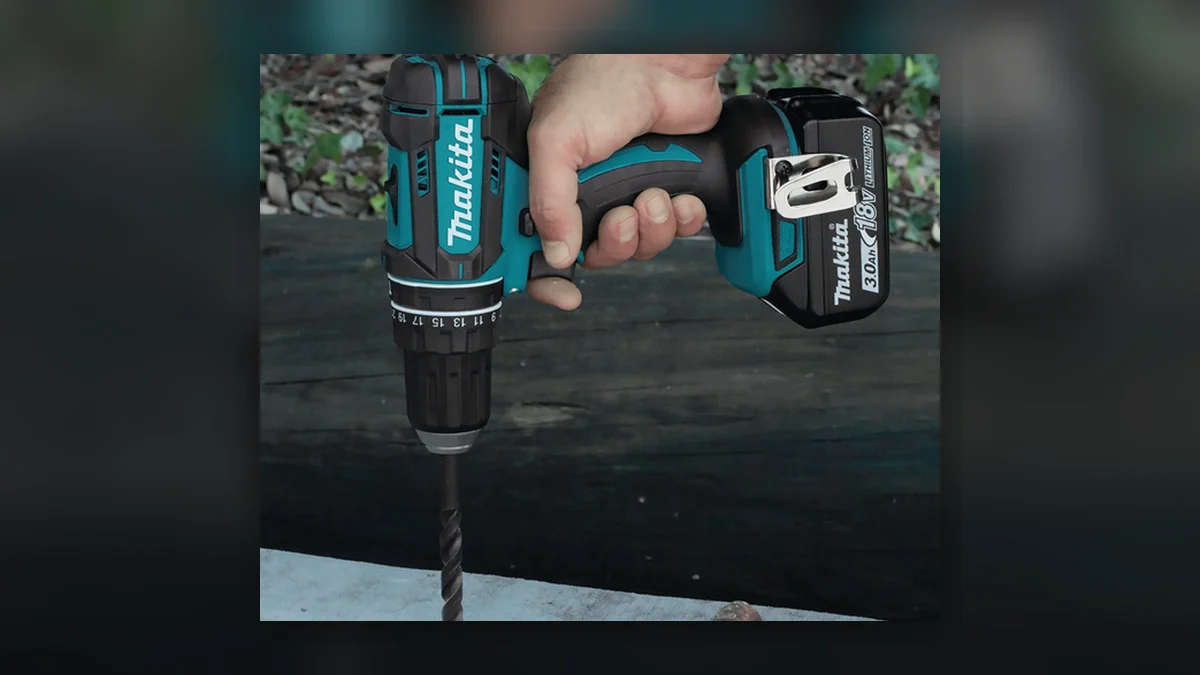
The 3.0Ah battery sits between compact and heavy-duty. It offers a reasonable balance of weight and runtime for general site use and is a common choice for combination kits. It suits drills, drivers, jigsaws, and reciprocating saws in everyday use where the work is varied rather than sustained.
4.0Ah
The 4.0Ah is less common than the 3.0Ah and 5.0Ah but offers a practical middle ground. It is a sensible choice for tools like multi-tools and detail sanders that draw moderate current over extended periods.
5.0Ah
The 5.0Ah battery is the workhorse of the Makita 18V range for most trade use. It gives enough runtime for sustained heavy work, runs circular saws, large grinders, and reciprocating saws for a full morning's cutting without a swap, and at roughly 600g it is still manageable on most tools.
For plumbers, electricians, joiners, and general builders running power tools throughout the day, the 5.0Ah is typically the right primary battery choice.
6.0Ah
The 6.0Ah battery extends runtime further for the most demanding applications. It suits large circular saws, hammer drills in reinforced concrete, heavy-duty angle grinders, and any situation where stopping to swap batteries causes a significant delay or safety concern.
The weight penalty is real: a 6.0Ah Makita 18V battery weighs around 750g, which is not trivial on a tool used continuously overhead or in tight spaces. For tools mounted on a workbench or used intermittently, the weight is less relevant.
---
Which Battery for Which Tool
Combi drill / general purpose drilling: 3.0Ah or 5.0Ah. The 3.0Ah keeps weight down for overhead work. The 5.0Ah gives full-day runtime on heavier material.
Impact driver: 3.0Ah or 5.0Ah. A good impact driver draws current in short bursts rather than continuously, so runtime figures are generous across all sizes. A 3.0Ah is comfortable for most fixing work.
Circular saw: 5.0Ah or 6.0Ah. Circular saws sustain high current draw through long cuts. A 2.0Ah battery will run a circular saw but only for a few cuts before the protection circuit kicks in under load. Always run 5.0Ah or higher on a circular saw.
Reciprocating saw: 5.0Ah. Similar reasoning to circular saws. High sustained current in demolition and rough cutting drains smaller batteries quickly.
Angle grinder (small, 115mm/125mm): 3.0Ah or 5.0Ah. Occasional use suits 3.0Ah. Heavy grinding and cutting suits 5.0Ah.
Angle grinder (large, 230mm): 5.0Ah or 6.0Ah. The 230mm grinder is a high-draw tool and deserves the largest battery in the range.
Multi-tool: 3.0Ah. The oscillating multi-tool is not a high-current draw tool for most applications. A 3.0Ah battery is more than adequate and keeps the tool's total weight manageable.
Jigsaw: 3.0Ah or 5.0Ah depending on the material and duration.
Inspection light / radio / fan: 2.0Ah. Accessories draw very little current. Putting a 6.0Ah battery on a site radio is unnecessary and leaves it unavailable for tools.
---
The Weight Trade-Off
Every Ah rating adds weight. For tool use at arm's length or overhead, battery weight is a fatigue factor over a full day. Here is the approximate weight progression across the Makita 18V range:
- 2.0Ah: approximately 350g
- 3.0Ah: approximately 450g
- 5.0Ah: approximately 600g
- 6.0Ah: approximately 750g
The difference between a 2.0Ah and a 6.0Ah battery is roughly 400g. That is not much in the hand, but after four or five hours of overhead drilling it is noticeable.
---
How Many Batteries Do You Need?
The practical answer for a working tradesperson is at least two primary batteries per heavy tool plus one or two lighter batteries for accessories. Running one battery and one charger is a single point of failure that will stop the job the moment the battery needs charging mid-task.
A reasonable starting point for a sole trader with a drill, impact driver, and circular saw would be four 5.0Ah batteries and two chargers. That allows two tools to run while two batteries charge, keeping the workflow continuous.
---