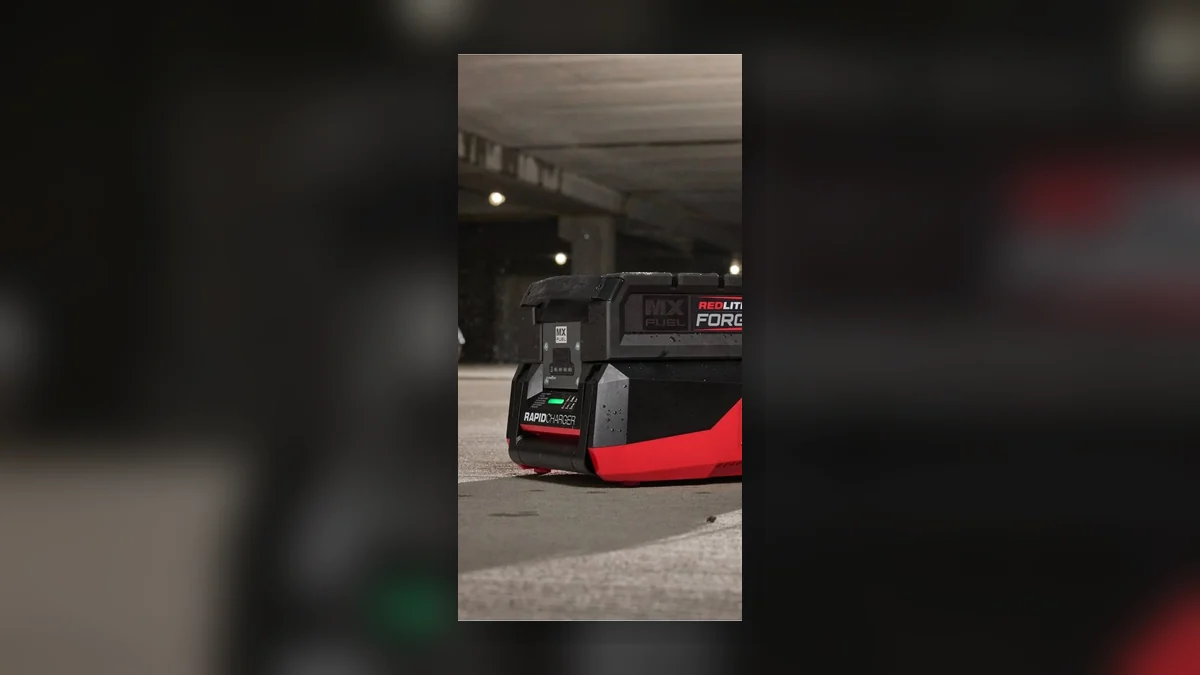
Image credit: Milwaukee Tool UK (reference only - use Milwaukee press imagery for publication)
---
If you have spent time trying to shift a badly corroded nut on a piece of plant machinery, or breaking out wheel bolts that have been on an HGV through several wet winters, you already know what an impact wrench is for. Milwaukee's M18 FUEL cordless impact wrench range has become a serious alternative to pneumatic tools for UK trades who need high torque output without the compressor, the hose, and the fixed air supply. This guide explains what the torque figures actually mean, how the range is structured, and which model is likely to be the right fit for your work.
---
What an impact wrench does that an impact driver cannot
An impact driver and an impact wrench both use a rotational hammering mechanism, but they are designed for fundamentally different tasks. An impact driver uses a 1/4-inch hex chuck and is built for driving screws and small fasteners. An impact wrench uses a square drive, typically 1/2-inch, 3/8-inch, or 3/4-inch, and is designed for tightening and loosening large nuts and bolts with significant torque.
The rotational force an impact wrench can produce is measured in Newton metres (Nm). To understand what this means on site: a typical adult can produce around 50 to 100 Nm of force by hand on a long spanner. A standard cordless impact driver might reach 250 to 300 Nm. Milwaukee's M18 FUEL High Torque Impact Wrench reaches over 1,350 Nm, the equivalent of a 135cm breaker bar with a 100kg person's full body weight applied at the end of it. That is the kind of force that unseats nuts that have been torqued on in a factory and then corroded for years.
---
The Milwaukee M18 FUEL Impact Wrench range: how it is structured
Milwaukee has structured its M18 FUEL impact wrench line around torque output and drive size, giving UK trades a choice that matches the scale of their work rather than forcing them towards a single specification.
M18 FUEL High Torque Impact Wrench 1/2-inch Drive
The High Torque variant is Milwaukee's top-end wrench, rated at 1,356 Nm of peak fastening torque and 2,034 Nm of nut-busting torque. The distinction between these two figures matters: fastening torque is what the tool applies when tightening a fastener. Nut-busting torque is the maximum reverse force applied to break a stuck fastener loose, which is typically higher because the mechanism can apply a harder hit in reverse.
To put 2,034 Nm in tangible terms: that is roughly the force you would get by placing a 2-metre scaffold pole over a socket wrench and having two adults hang from the end of it simultaneously. Very few corroded nuts will survive that kind of input.
This model is the specification choice for heavy plant maintenance, commercial vehicle work, steelwork fixing, and any application where fasteners are large, numerous, or have been in place for a long time.
M18 FUEL Medium Torque Impact Wrench 1/2-inch Drive
The Medium Torque model delivers up to 881 Nm of peak torque and 1,220 Nm of nut-busting torque. That is still a significant figure, more than enough for automotive wheel bolts, M20 structural bolts, and most general construction fastening tasks.
The Medium Torque wrench is lighter and more compact than the High Torque version, which makes it more comfortable for extended use or for applications where working space limits what size tool can be brought in. Many UK trades find the Medium Torque sufficient for their daily work and reserve the High Torque only for the exceptional jobs.
M18 FUEL Impact Wrench 3/8-inch Drive
The 3/8-inch drive model runs at a lower peak torque but in a significantly smaller and lighter package. It uses the smaller square drive common on mechanic's socket sets, which gives access to the full range of standard 3/8-inch sockets. For vehicle servicing, HVAC installation, and general mechanical work where nut and bolt sizes are moderate and space is tight, the 3/8-inch wrench is often the more practical choice than carrying a larger 1/2-inch model.
---
Three-speed control: why it matters on site
All Milwaukee M18 FUEL impact wrenches feature three-speed control, selectable via a mode button on the tool. The practical value of this is often underestimated.
At low speed, the tool applies controlled torque, which is critical when bringing bolts to a set torque rather than driving them to destruction. Overtightening fasteners damages threads and flanges, and many structural applications specify maximum torque values. Running an impact wrench at full chat on a finished joint is not the right approach.
At medium speed, the tool offers a balance of speed and control suited to most general fastening work.
At high speed, the full power output is available for the heavy-duty loosening and tightening tasks the tool is designed to handle.
Some Milwaukee M18 FUEL wrenches also include BOLT REMOVAL mode, which applies maximum force in a brief burst specifically designed to break a stuck fastener, then reduces speed once the bolt is moving to avoid the nut or bolt flying off unexpectedly when it breaks loose.
---
Running on M18 batteries: the platform advantage
Every model in the M18 FUEL impact wrench range uses the standard M18 battery platform. Trades who already operate Milwaukee M18 cordless tools, whether drill drivers, impact drivers, angle grinders, or circular saws, can power any M18 FUEL impact wrench from the same battery packs.
For high-draw use, Milwaukee's higher-capacity M18 REDLITHIUM HD (High Demand) battery packs maintain consistent output longer and handle the sustained load of a high-torque wrench better than the lighter-duty M18 compact packs. If you are using the High Torque wrench for continuous heavy work, running it on HD packs makes a meaningful practical difference.
---
Cordless versus pneumatic: where the M18 FUEL stands
Pneumatic impact wrenches running from a compressor can produce exceptional torque and can sustain it for as long as the compressor runs. For workshop-based heavy vehicle work, pneumatic tools remain the standard.
Where cordless closes the gap is in portability and speed of setup. No compressor, no hose, no need for a power supply at the point of work. For trades who move between locations, work outdoors, or need to get into tight spaces where running a hose would be impractical, the M18 FUEL wrench offers pneumatic-class performance without the infrastructure overhead.
The cordless tool also removes the trip hazard and management burden of a compressor hose on a busy site, which is worth factoring into the safety case as well as the convenience case.
---