
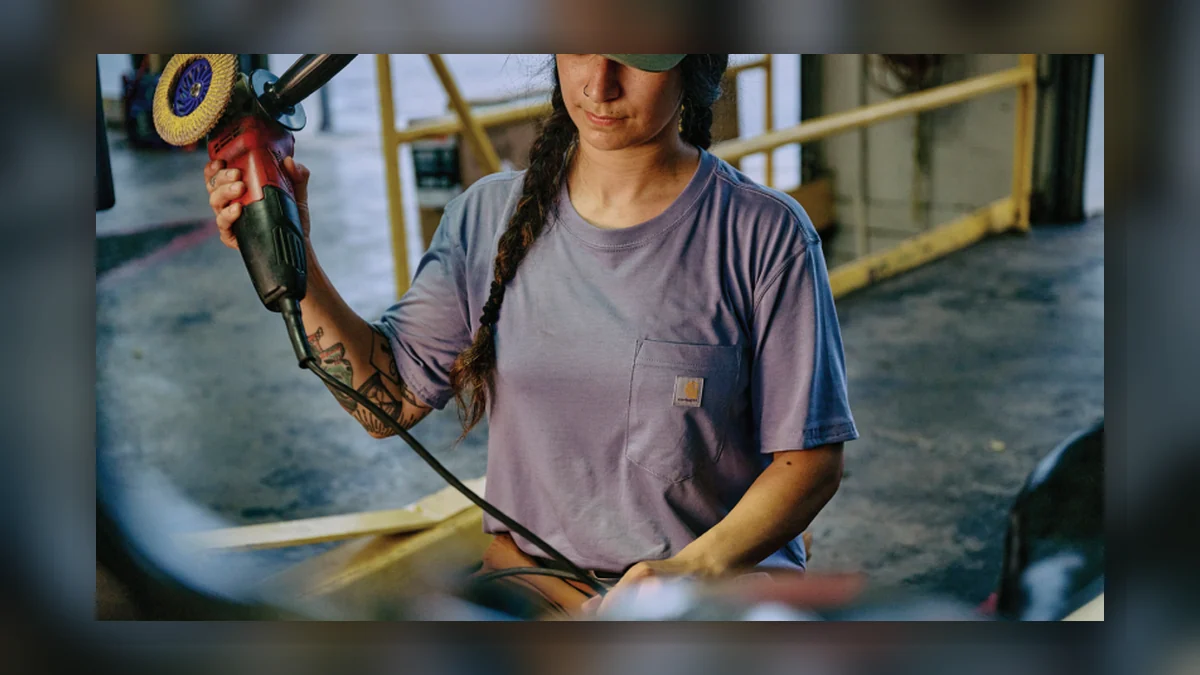
Image credit: Carhartt / Professional Builder (reference only)
---
Meta
---
Hot weather on a UK building site is not the relaxed sun that holiday brochures promise. It is radiant heat bouncing off concrete, UV through no cloud cover, and a full day of physical work in gear that has to be both functional and protective. Getting it wrong means heat exhaustion risk, sunburn, and a body that is spent by early afternoon.
Carhartt's Nick Poulson has shared guidance on choosing summer workwear for site conditions, and it covers territory that most workwear conversations skip: fabric science, UV protection ratings, and why the cheapest breathable tee is not doing what you think it is.
---
Why regular summer clothing does not work on site
A standard cotton t-shirt becomes saturated with sweat quickly. Wet cotton sticks to skin, provides minimal UV protection, and traps heat rather than releasing it. At the same time, PPE requirements on most UK sites mean you cannot simply strip down to minimum coverage. Arms often need protection from cuts and abrasion regardless of the temperature.
The answer is purpose-built summer workwear that combines breathability, UV blocking, and sufficient durability for site conditions, without the weight and heat retention of standard workwear fabrics.
---
What UPF actually means
UPF stands for Ultraviolet Protection Factor. It tells you how much UV radiation a fabric blocks before it reaches your skin.
A standard white cotton t-shirt typically has a UPF rating of around 5 to 10. That means somewhere between 10 and 20 per cent of UV radiation passes through the fabric and hits your skin. On a full day outside, that is meaningful sun exposure even through clothing.
A garment rated UPF 30 blocks around 97 per cent of UV. UPF 50 blocks approximately 98 per cent. The jump from UPF 30 to UPF 50 is smaller than it looks numerically, but both are dramatically better than an unrated cotton tee.
For outdoor trades, a UPF 30 minimum rating on any garment covering your arms and upper body is a reasonable starting point. On roofs, in groundworks, or anywhere with extended unshaded exposure, UPF 50 is the sensible choice.
---
Breathability: what the labels mean
Breathable fabric refers to a material's ability to allow moisture vapour to pass through it outward. Sweat produced by the body needs somewhere to go. In a non-breathable fabric, it stays against the skin, raising temperature and creating discomfort. In a breathable fabric, moisture moves through the weave and evaporates from the outer surface.
The best summer work garments combine a wicking layer (which draws sweat away from the skin) with a breathable outer weave that allows that moisture to escape. Polyester blends, particularly those with open mesh panels at high-sweat areas like underarms and across the back, perform better than cotton in sustained heat.
Carhartt's guidance specifically points to mesh ventilation panels as a key feature to look for. These allow airflow at points where heat builds fastest and where fabric touching the skin is most uncomfortable.
---
Fit and coverage on site
Loose-fitting garments allow more air circulation than tight ones. In summer conditions, a shirt with a slightly relaxed fit moves better with the body, creates more space for air movement, and reduces chafing at points of friction.
Long sleeves in a lightweight, breathable UPF-rated fabric are often more comfortable in sustained sun than short sleeves, partly because they reduce the direct UV on the forearm and partly because light-coloured fabric reflects radiant heat better than exposed skin absorbs it. It sounds counterintuitive but field experience from workers in consistently hot climates consistently supports it.
High-visibility requirements still apply on most managed sites regardless of temperature. A number of manufacturers now produce hi-vis summer shirts in breathable fabrics, addressing the old problem of hi-vis that was essentially plastic-coated oven material.
---
What Carhartt covers in the summer range
Carhartt's summer workwear range includes breathable tees and shirts in their lightweight fabric blends, with UPF ratings and reinforced stress points suitable for site work. The focus is on practical durability: pockets in the right places, stitching that handles the repeated movement of physical work, and fabrics that hold their shape wash after wash.
For trades who wear workwear daily, durability is as important as comfort. A summer shirt that fades, loses shape, or degrades at stress points after six weeks of daily use is not an economy.
---
Sun protection beyond the clothing
Workwear only covers what it covers. UV hits exposed skin on hands, neck, face, and forearms if you roll sleeves up. A separate post covers the current push by manufacturers and trade organisations to get sunscreen recognised as PPE, but the short version is: SPF 30 or above, reapplied every two hours on exposed skin, is the recommendation for outdoor workers.
Hats matter. A brim around the face and neck provides shade that no garment can replicate and no amount of UPF rating in a shirt can compensate for.
---