
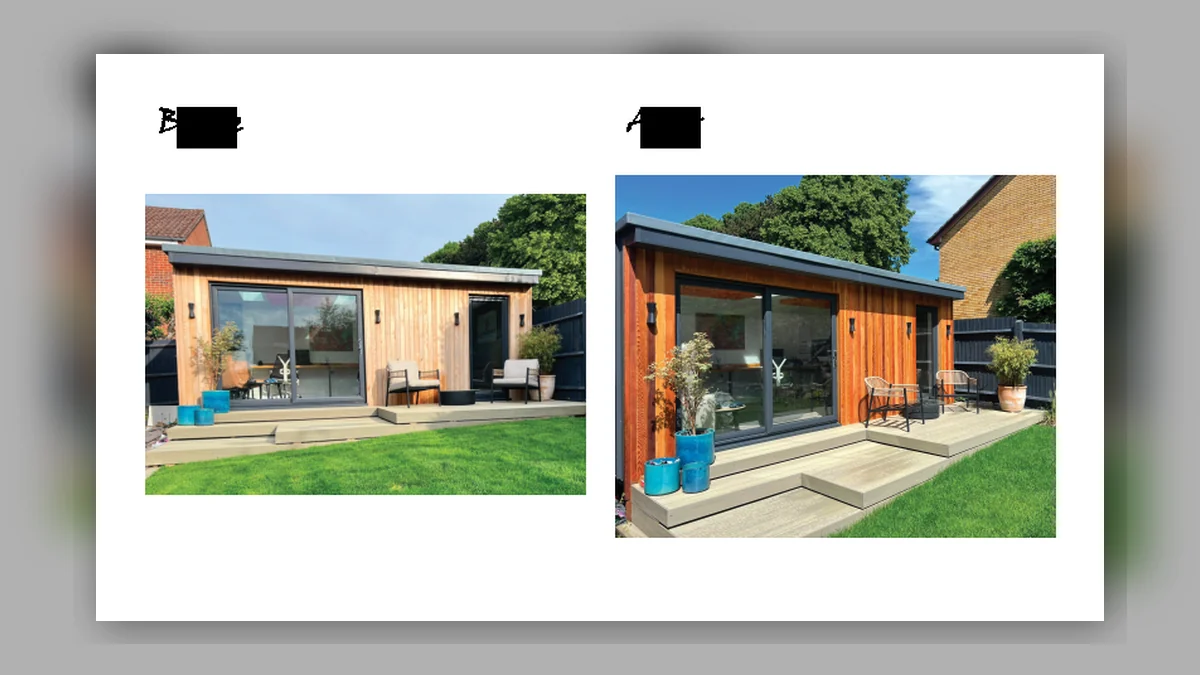
Brand: Barrettine
---
Garden room installation has grown into a steady stream of work for builders, joiners, and landscaping firms across the UK over the last few years. Barrettine is using a garden room renovation case study to highlight something that often gets overlooked once the structure is up: timber cladding protection.
The problem with unprotected cladding
Timber cladding on an outdoor structure is exposed to a combination of UV radiation, moisture cycling, and temperature swings that degrades unprotected wood quickly. UV exposure in particular is the driver of the greying and surface cracking that most people notice first. The grey colouration itself is not structural damage, but the drying and cracking of surface fibres that accompanies it does open the wood to moisture ingress.
Once moisture penetrates through the surface, the degradation accelerates. Repeated wet and dry cycles work the fibres apart. In softwood cladding, this can lead to significant surface erosion and, over time, to penetration deep enough to affect structural integrity.
In a UK summer, particularly during periods of sustained sunshine and heat like the current heatwave conditions, UV degradation can advance quickly on previously untreated or poorly maintained cladding. The sun angle is higher and the UV index is elevated compared to winter months, meaning summer is both when the problem progresses fastest and when fresh treatment has maximum benefit.
What Barrettine's cladding oil does
Barrettine produces a range of timber treatment products for outdoor use. Its cladding oil is designed specifically for this application: it penetrates the surface fibres rather than forming a surface film, which means it works with the natural movement of the timber through seasonal moisture changes rather than cracking and peeling like a surface coat.
The oil contains UV-blocking pigments that slow the photodegradation process, along with preservative components that inhibit fungal growth and rot. It is available in clear and tinted finishes, which allows builders to either preserve the natural appearance of the timber or apply a consistent colour across a renovation project.
For builders doing garden room work, recommending a proper initial oil treatment to clients at handover, and advising on a maintenance interval (typically annually or every two years depending on exposure), protects the quality of the work and reduces the likelihood of the client coming back unhappy with how the cladding looks after two summers.
When to treat
New timber cladding ideally receives an initial treatment before installation, which protects the cut ends and back face as well as the visible surface. Where that has not happened, treatment applied after installation still significantly extends service life.
For renovation work on existing cladding that has already greyed, a preparatory clean using an appropriate timber cleaner removes the surface contamination and oxidised wood fibres before oil is applied. Attempting to treat over dirty or contaminated cladding reduces penetration and adhesion, leading to faster breakdown of the treatment.
In the current hot weather, timing of application matters. Cladding oil applied to hot timber in direct sunlight dries too quickly on the surface before it has penetrated properly. Application in the early morning or evening, or on the shaded face of the structure first, produces a better result.
---
- Professional Builder
- Reference image: Garden room cladding renovation