
Sources
- GP Alice Fitzgibbon has written a piece for Professional Builder on occupational hearing damage in the construction sector. The core message is a straightforward but important one: the damage happens gradually, across years, and is irreversible by the time it becomes noticeable.
- ## How noise damages hearing
- The inner ear contains tiny hair cells that respond to sound vibrations and convert them into signals that the brain interprets as sound. Repeated exposure to loud noise physically damages these cells. Unlike other cells in the body, they do not regenerate.
- The damage accumulates with each exposure. A single brief exposure to very loud noise, such as a nail gun fired close to an unprotected ear, can cause instant damage. More commonly, the damage builds over months and years of working in noisy environments without adequate protection.
- By the time someone notices consistent ringing in the ears (tinnitus) or difficulty following conversations in noisy environments, meaningful hearing loss has typically already occurred.
- ## Which tools and conditions pose the highest risk
- The tools most commonly associated with occupational hearing damage in construction are angle grinders, disc cutters, concrete breakers and jackhammers, nail guns, and high-powered rotary drills. All of these regularly exceed 85 decibels in normal use, which is the level at which UK regulations require hearing protection to be provided.
- An angle grinder at full speed can reach 100 decibels at the operator's ear. To put that in context: 100 decibels is roughly four times as loud as a typical shouted conversation. Sustained exposure at that level without protection, even for minutes at a time across a working day, contributes to cumulative damage.
- ## What the regulations require
- The Control of Noise at Work Regulations 2005 set two action levels. At an average exposure of 80 decibels across the working day, employers are required to make hearing protection available and provide information about the risks. At 85 decibels, providing and enforcing the use of hearing protection becomes a legal duty. Above 87 decibels, work should not proceed without adequate attenuation.
- For self-employed trades, the same principles apply in practice. The regulations extend to self-employed workers in many contexts, and the health consequences are the same regardless of employment status.
- ## What this means practically
- For tradespeople working regularly with high-noise tools, PPE is not optional. The choice of hearing protection matters too. A pair of cheaply made foam earplugs provides some attenuation but less than a set of properly fitted earmuffs or custom-moulded plugs rated to the noise level of the tools being used.
- Site managers and safety officers should be checking that hearing protection is worn whenever high-noise tools are in use, not just near them. Noise at 90 decibels does not stay localised. Adjacent workers without hearing protection receive meaningful doses whether or not they are operating the tool themselves.
- The most practical step for any tradesperson unsure about their current hearing health is a hearing test. These are available through GPs and through occupational health services and provide a baseline that makes it possible to detect change over time.
- Professional Builder
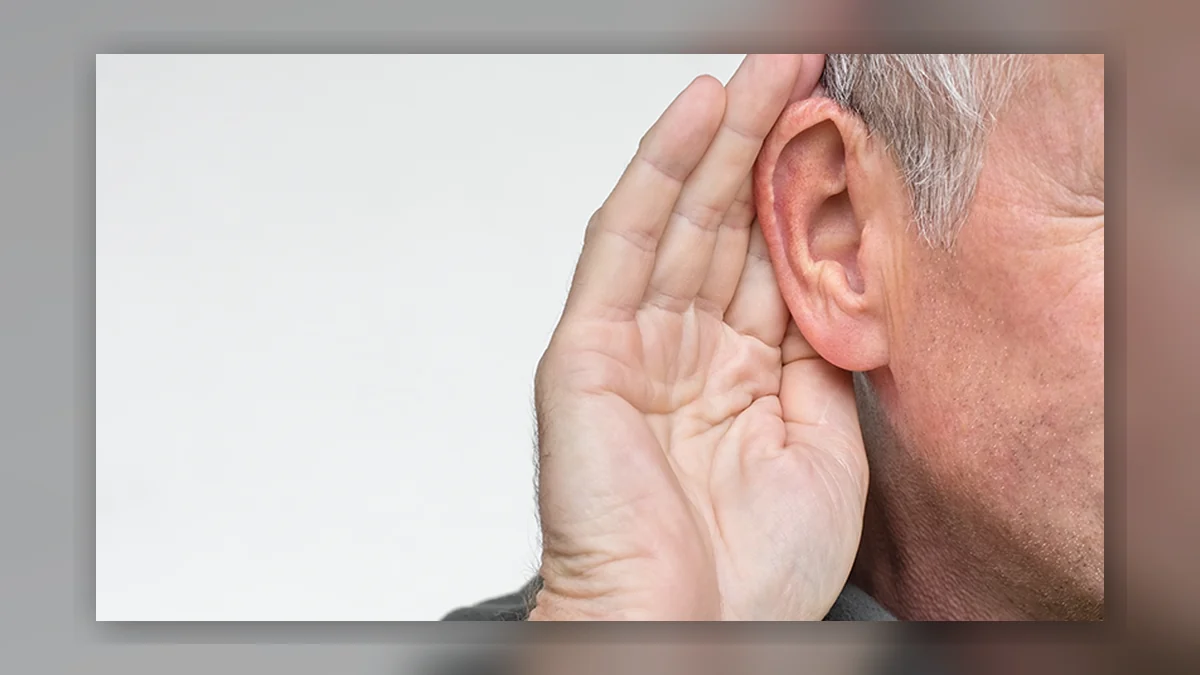
- Reference image: Hearing health in construction