
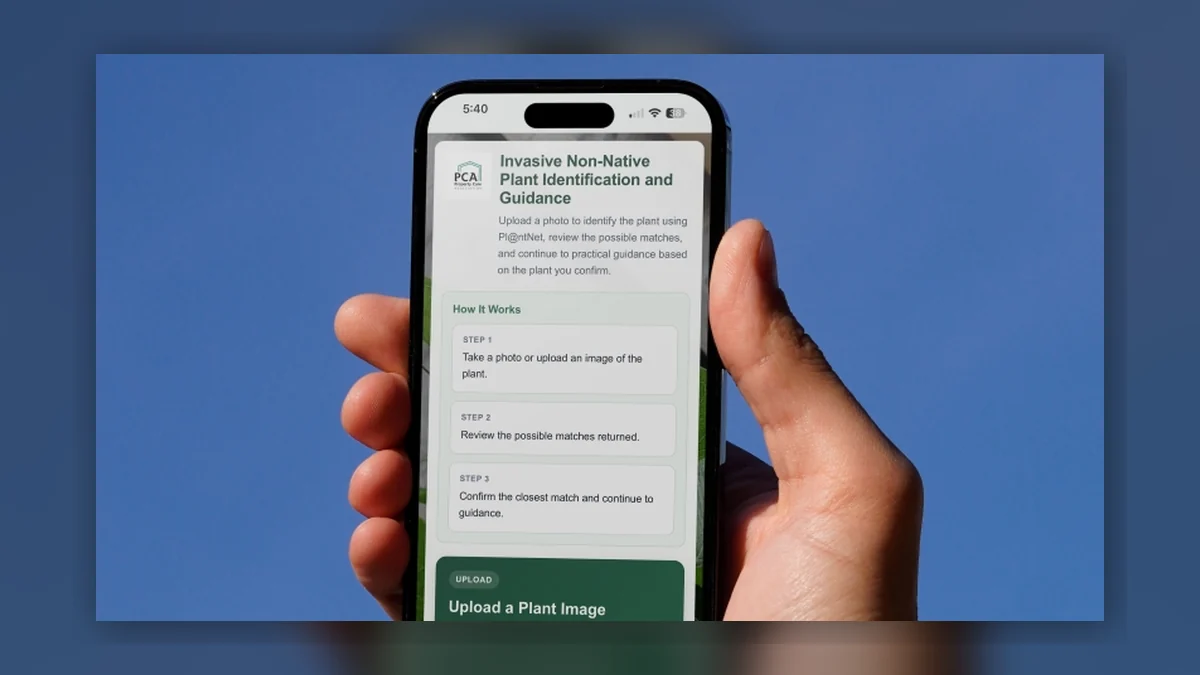
Professional Builder has reported on a new app designed to help builders identify invasive plant species and take the correct action when they encounter them on construction sites. The focus is practical: invasive plants, and Japanese knotweed specifically, create real legal and programme risk for building projects when they are not dealt with correctly.
---
Why this matters for builders
Finding Japanese knotweed on a site you are working on is not just an inconvenience. It carries specific legal obligations under UK law — and getting those obligations wrong can mean prosecution, costly remediation orders, or civil liability.
Knotweed spreads from roots, not seeds. The root system can extend three metres below ground and seven metres laterally from the visible above-ground plant. That means a patch visible on one side of a boundary can have roots well under a neighbouring property. Disturbing those roots during excavation — by digging, strimming, or moving contaminated soil without following the correct procedure — can make the spread problem significantly worse and create liability for the builder carrying out the work.
The relevant legislation includes the Wildlife and Countryside Act 1981 and Schedule 9, the Environmental Protection Act 1990 (treating contaminated knotweed soil as controlled waste), and the Infrastructure Act 2015, which introduced a specific knotweed code of practice for lenders and landowners. In practice, this means:
- Knotweed-contaminated soil cannot be taken off site and disposed of with standard builders' waste.
- Disturbing knotweed without a management plan in place can constitute a criminal offence if it causes the plant to spread.
- Mortgage lenders now routinely require a knotweed management plan before approving a sale, which can affect a development's exit route.
---
What the app does
The app, reported by Professional Builder, is designed to help builders and site workers identify invasive species they encounter during work. The identification step is critical: knotweed looks significantly different depending on the season, and in early spring the young shoots look nothing like the familiar summer canes. An identification tool that uses images and a guided process reduces the chance of knotweed being dismissed as ordinary vegetation and disturbed before the correct process is followed.
Once a species is identified, the app can guide users on the appropriate next steps, which in the case of knotweed includes logging the find, avoiding disturbing the area, and contacting a qualified specialist.
---
Other invasive species builders should know
Knotweed gets the most attention but it is not the only invasive plant with legal implications for construction:
Giant hogweed produces sap that causes severe chemical burns when skin is exposed to sunlight. Direct contact during clearance work without the correct PPE is a serious health risk. It is listed under Schedule 9 of the Wildlife and Countryside Act.
Himalayan balsam spreads aggressively along watercourses and is common on brownfield sites near rivers and streams. It is not as legally complex as knotweed but its removal still requires correct disposal rather than leaving cuttings on site where they can re-root.
Rhododendron ponticum is a significant issue on larger rural and semi-rural sites, particularly in Scotland and Wales, where it establishes dense thickets that suppress all other vegetation.
An identification app that covers multiple species gives site managers and groundworks teams a single tool for the most common invasive plant risks.
---
Practical steps if you find knotweed
Mark the area and do not disturb it.
Inform the principal contractor or site manager immediately if you are working under a contract.
Do not attempt to remove knotweed without a licensed specialist and a proper management plan in place. Incorrect removal makes the problem worse and creates legal exposure.
Check whether a ground investigation report was carried out for the site before works began. Knotweed should ideally be identified at the pre-construction phase rather than discovered during excavation.
---
- New app to help builders take action on invasive plants
- Wildlife and Countryside Act 1981, Schedule 9
- Environmental Protection Act 1990
- Infrastructure Act 2015, Japanese Knotweed Code of Practice