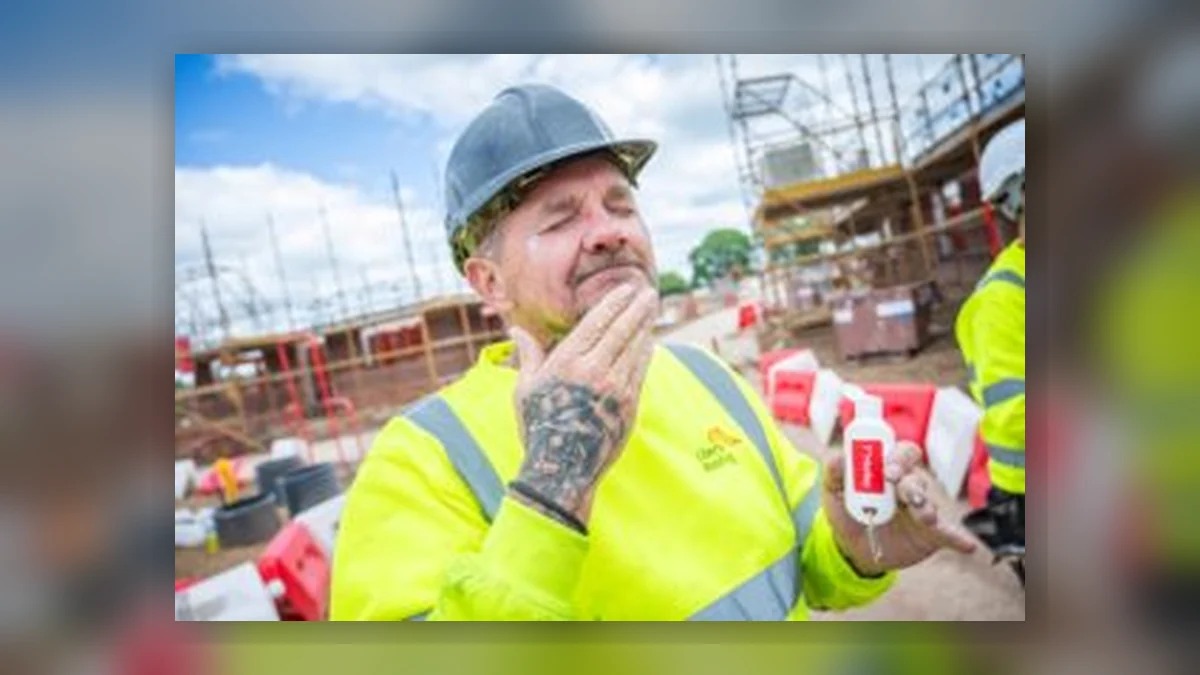
Building envelope manufacturer Marley has launched its 2026 Safe in the Sun campaign with a direct message to the UK construction industry: treating sun protection as an optional extra is no longer acceptable.
The campaign, now in its latest edition, makes the case that UV protection -- sunscreen, UPF-rated clothing, and shade planning -- should sit alongside hard hats, safety boots, and hi-vis in any responsible site safety plan.
Why It Matters on Site
Outdoor workers face more UV exposure in a single summer week than most office workers receive across the whole year. Roofers, groundworkers, scaffolders, and anyone regularly working at height or in open spaces are among the highest-risk groups in the UK workforce for occupational skin cancer.
Skin cancer caused by UV exposure is one of the most preventable occupational diseases -- and one of the most frequently overlooked. The HSE classifies UV radiation as a workplace hazard, yet site culture often treats sunscreen as a personal lifestyle choice rather than protective equipment.
Marley's campaign pushes back on that culture gap by framing sun protection in the same terms as other PPE: something provided, checked, and enforced, not left to the individual to remember.
What the Campaign Covers
The Safe in the Sun 2026 campaign targets the construction and roofing trades specifically, given the high levels of sustained outdoor exposure in those sectors. Key messages include:
Sunscreen with a minimum SPF 30 should be applied before starting work and reapplied through the day -- not just at lunchtime. A factor 50 is better for pale skin or extended outdoor exposure.
UPF-rated clothing -- workwear that blocks UV rays rather than simply covering skin -- provides consistent protection that does not wear off or sweat away the way sunscreen can.
Scheduling work to avoid peak UV hours (typically 11am to 3pm during British summer) is a practical adjustment where tasks allow.
Shade, where available, should be treated as a resource, not a luxury.
A Useful Reminder at the Start of the Season
With British summer now underway and sites running longer daytime hours, June is the point when UV risk peaks. A campaign that arrives at the right moment in the trade calendar is more likely to land than one published in January.
Marley's campaign is directed at employers and site managers as much as individual workers -- the framing of sun protection as PPE places responsibility on the business to provide and enforce it, not just remind people to bring their own.