
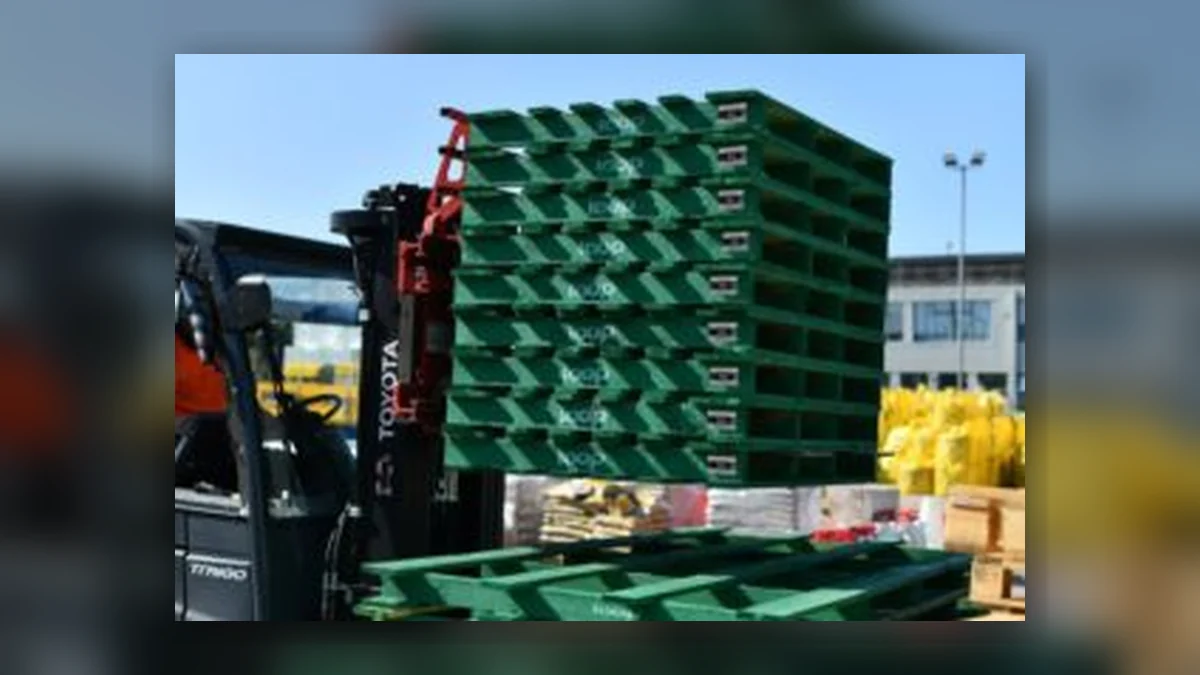
The Pallet LOOP, an initiative that collects, inspects, repairs, and returns wooden pallets within the UK construction supply chain, has marked two years of operation. The scheme targets a specific and often overlooked category of construction waste: timber pallets that carry materials to site and are then discarded, broken up, or simply left to rot in a corner of the yard.
Professional Builders Merchant reported on the milestone, describing the scheme as "two years of driving circularity in construction."
---
What the Pallet LOOP does
The basic idea is straightforward. Building materials arrive on site on wooden pallets. Traditionally, those pallets were treated as single-use packaging: the materials were unloaded, and the pallet was either broken up for site waste, used once more as a makeshift surface, or skipped.
The Pallet LOOP works differently. Pallets carrying materials from participating suppliers are marked as part of the scheme. Once unloaded, they are collected rather than discarded. Back at a centralised facility, each pallet is inspected. Pallets that are in good condition are returned directly to the supply chain. Pallets that need repair are fixed before re-entering service. Pallets that are genuinely at end of life are recycled rather than landfilled.
The result is a closed loop: the same pallet stock circulates through the supply chain multiple times rather than being manufactured, used once, and discarded.
---
Why this matters for UK construction
The construction industry generates a significant proportion of the UK's total waste output. Timber packaging — pallets, crates, boards, and off-cuts — is a consistent contributor to that figure. Pallets are particularly wasteful because the raw material is high quality: the timber used in a well-made pallet could serve many more cycles before it is genuinely worn out.
The Pallet LOOP does not require anyone on site to do anything fundamentally different. The collection function is built into the supply and delivery chain. For main contractors and builders merchants, it removes the cost and inconvenience of dealing with empty pallets as waste, which currently means either paying for them to be skipped or finding a legitimate timber recycling route.
For suppliers and merchants participating in the scheme, it signals a commitment to reducing packaging waste that increasingly matters to their own clients, particularly on projects with sustainability criteria attached to planning conditions or client procurement requirements.
---
Two years in
Reaching two years of operation is a practical milestone for any circular logistics scheme. The Pallet LOOP model depends on sufficient scale to make collection economically viable and on consistent participation from suppliers, merchants, and site teams across the supply chain. A scheme that is still operating and growing at two years has demonstrated that the logistics work in practice, not just on paper.
The Professional Builders Merchant report notes the two-year mark as a moment to recognise the scheme's progress in embedding circular principles in what has historically been a very linear part of construction logistics.
---
Broader context: circular economy in construction
The Pallet LOOP sits within a wider shift in UK construction towards reducing embodied waste. Initiatives across the sector are addressing everything from structural steel reuse to recovered brick and reclaimed timber. Pallets are a comparatively unglamorous category within that movement, but they are ubiquitous: almost every material delivery to any site in the UK arrives on one.
The principle the Pallet LOOP demonstrates is applicable beyond pallets. Packaging that has been engineered to carry weight and survive transport is worth recovering and reusing. Designing the recovery into the logistics chain from the start, rather than treating it as an afterthought, is what separates a functioning circular model from a recycling aspiration.
---