
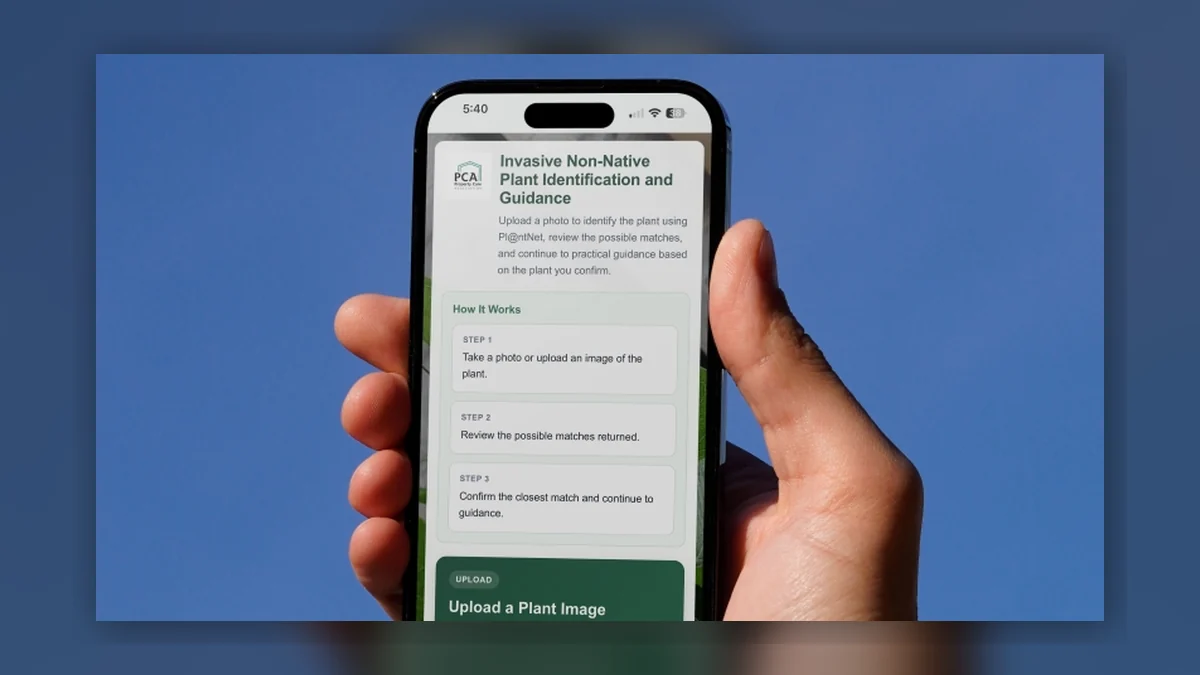
Image credit: Professional Builder / PCA (reference only)
Sources
- The Property Care Association (PCA), the national trade body covering invasive weed treatment among other disciplines, has launched a new app designed to help construction professionals identify and report invasive plant species on site.
- The app is aimed squarely at builders, groundworkers, and contractors who may encounter invasive species during site preparation or groundworks, often before a specialist surveyor has been engaged. Early identification matters because the legal and financial consequences of disturbing invasive plant material without following correct procedures can significantly affect a project.
- ## The Three Species That Matter Most
- Japanese knotweed is the most well-known invasive plant on UK construction sites and carries the most serious consequences. It can cause structural damage by growing through gaps in hard surfaces and building materials, and its presence on a property affects mortgage valuations and planning decisions. Under the Environmental Protection Act 1990, Japanese knotweed is classified as controlled waste, meaning excavated material containing it must be disposed of through licensed contractors rather than normal waste routes. Disturbing it without a management plan in place can expose contractors to enforcement action and civil liability.
- Giant hogweed is the second major species. It is a physical hazard as well as an environmental one: contact with its sap in sunlight causes severe chemical burns and blistering. Contractors working on sites with giant hogweed present face a direct health and safety obligation to protect workers and anyone in the vicinity.
- Himalayan balsam is less immediately hazardous than the other two but spreads aggressively along waterways and into disturbed ground. Its presence on a site can complicate planning applications near watercourses and trigger conditions around its removal before work begins.
- ## What the App Does
- The PCA's app provides a structured identification tool, allowing site workers to photograph and log potential invasive species and cross-check against identification guides. The PCA's membership includes specialist contractors qualified to survey and manage these species, and the app creates a pathway to connect a sighting with the appropriate response.
- For construction professionals, the practical value is in catching a potential issue during site walks or early groundworks, before a large excavation has taken place and the scale of the problem becomes difficult to manage. Discovering Japanese knotweed after machine excavation has spread the rhizomes across a site is a considerably more expensive situation than identifying it before breaking ground.
- Professional Builder
- Professional Builder
- Property Care Association