
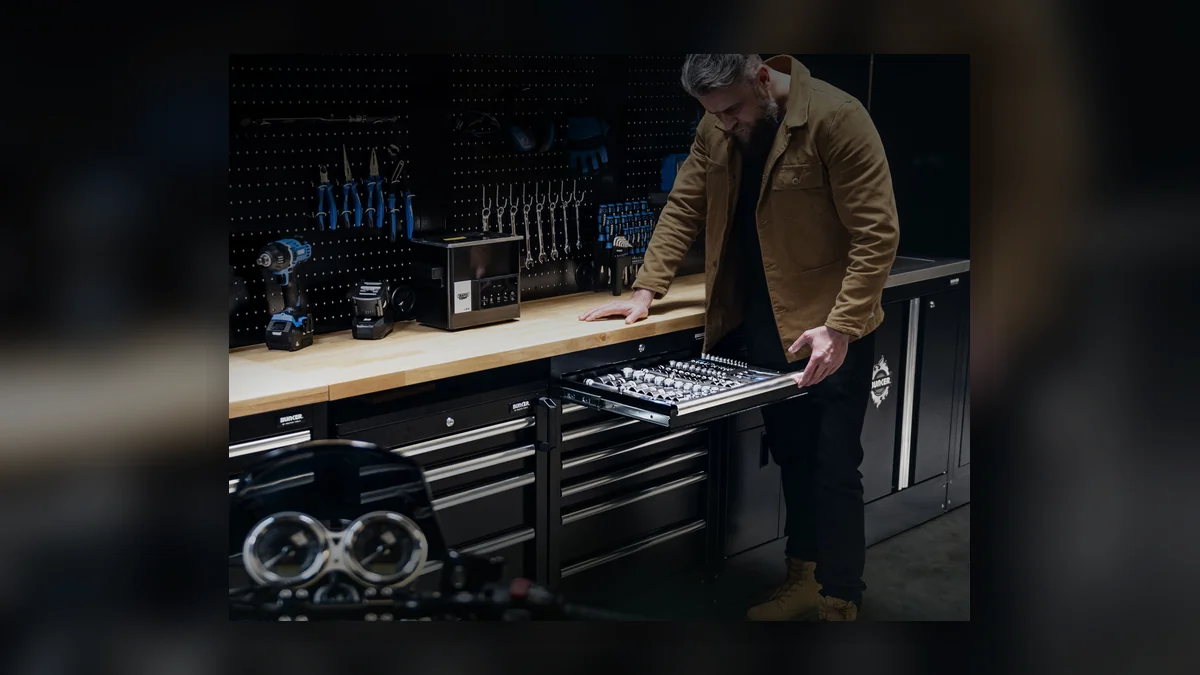
Brand: BUNKER (Draper)
---
Tool storage is one of those purchases where the price gap between the cheapest and the premium option can be four or five times over, and it's genuinely hard to tell from a product listing whether the extra money buys anything you'll actually notice in daily use. BUNKER, Draper's premium storage range, sits toward the top of that price ladder, so it's worth working through what the premium actually pays for before deciding whether it's the right call for your workshop or van.
What you're paying for in a premium tool chest
The difference between a budget tool chest and a premium one rarely shows up in the spec sheet — most ranges list broadly similar drawer counts and dimensions. It shows up in the gauge of steel used for the carcass and drawers, the quality of the drawer runners, and how the whole unit holds together after two or three years of being loaded, slammed shut, and rolled around a workshop floor.
Heavier-gauge steel resists denting and racking (the cabinet twisting slightly out of square when loaded unevenly), which matters more than it sounds once a chest is carrying several hundred kilograms of tools. Ball-bearing drawer runners, rather than basic sliders, are the other big difference: they support more weight without binding, extend fully so you can see and reach the back of a loaded drawer, and don't sag or drop over time the way cheaper runners do. If you've ever fought a drawer that's stiff to open when full, that's almost always the runner quality, not the drawer itself.
Soft-close drawers and foam lining
Soft-close mechanisms stop drawers slamming when the chest is on a mobile base or in the back of a van taking speed bumps, which protects both the drawer runners and whatever is stored in the drawer above. Foam drawer liners, which BUNKER fits as standard, cushion tools against each other so edges and finishes don't get chipped and small parts don't rattle around loose. Neither feature is essential to a tool chest doing its basic job, but both reduce wear on the tools you're storing, which is the part of the cost equation people tend to forget when comparing sticker prices.
Build quality and finish
BUNKER units use a powder-coated steel finish, which is significantly more resistant to chipping, scratching and rust than a basic painted finish, particularly relevant if the chest lives in a garage, workshop or van rather than a climate-controlled office. Anodised aluminium trim on drawer fronts and edges adds a further layer of wear resistance in the areas that take the most knocks — corners, handles, and drawer fronts.
Warranty as a quality signal
BUNKER is backed by a 10-year warranty, which is a genuinely useful proxy for how confident the manufacturer is in the build. A 10-year warranty on a tool chest only makes commercial sense if the failure rate over that period is low, so it's a reasonable, if indirect, signal that the steel gauge, welds and runners are built to last rather than to hit a price point.
Is the premium worth it for UK trades?
For a tradesperson running a chest daily — loading and unloading a van, working it hard on site, relying on drawers staying true and runners staying smooth after daily abuse — the premium buys fewer replacement cycles and less downtime from a jammed or racked drawer mid-job. For occasional home workshop use, where the chest sits in one place and gets opened a handful of times a week, a mid-range chest will likely do the job for considerably less outlay, and the extra durability of a premium range may never get tested.
The honest answer is that the premium is worth it in proportion to how hard and how often the chest gets used. Daily trade use justifies the extra spend through reduced replacement and repair costs over the chest's life; light domestic use is a harder case to make on value alone.