
<!-- Meta Title: Autumn Site Clean-Up With a Cordless Blower: The Three-Stage Method That Actually Works --> <!-- Meta Description: Blowing leaves into a pile isn't an autumn clean-up on its own. Here's the blow-bag-mulch method groundworkers, landscapers and property maintenance trades should be using with a cordless blower this season, and why it matters for UK site work. -->
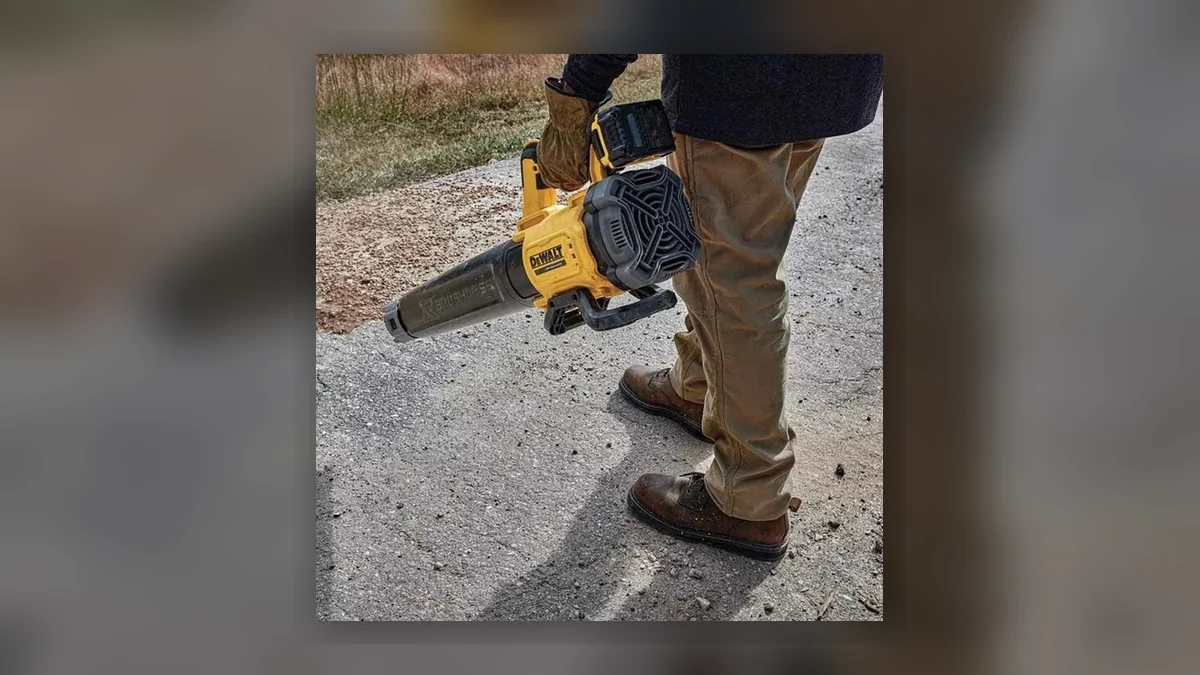
As UK sites and gardens head into autumn, leaf and debris clearance becomes a recurring line item for groundworkers, landscapers, property maintenance contractors and anyone running a general building or gardening service. Toolden's blog flagged a useful point worth expanding on for a trade audience: moving leaves from one part of a site to another with a blower isn't a finished job, it's just relocation. The wind undoes it within the hour. A proper clean-up needs three distinct stages, and cordless blower platforms like DeWalt's XR and FlexVolt ranges are built to cover all three without swapping tools.
---
Stage One: Blow — Consolidate, Don't Just Displace
The first stage is still blowing, but the goal is consolidation rather than removal. Leaves, cut vegetation and light debris get worked into manageable piles at collection points rather than pushed off the edge of the working area. On a domestic garden this might mean piling onto a tarp; on a commercial or construction site it means directing debris toward a skip, bagging station or designated compound area where it can be dealt with in one pass.
Cordless blowers earn their keep here because they let a single operator move quickly around obstacles, planters, parked vehicles, plant and site cabins without trailing a lead or waiting on a generator. Variable speed control matters at this stage: full power scatters light debris and shifts gravel or bark mulch that should stay put, while a lower setting concentrates the airflow on the material you actually want to move.
Stage Two: Bag or Vacuum — Actually Remove the Material
Consolidating debris into a pile only solves the problem until the next gust or footfall. The second stage is collection: either vacuuming the pile directly into a bag or hopper, or physically loading it for disposal. This is the stage that's easiest to skip under time pressure, and it's the one that determines whether the site actually looks clear at the end of the day or just looks clear until the wind picks up.
Blower/vac combination units, where the same motor housing switches between blow and vacuum modes, are worth having in the van for exactly this reason. For contractors managing multiple small sites in a day — gutters, driveways, communal areas on housing developments, forecourts — being able to blow, then switch to vac mode and clear the pile into a bag without changing tools saves real time.
Stage Three: Mulch — Reduce Volume Before Disposal
The third stage, mulching, is the one most likely to get skipped on a trade job but it has a direct cost benefit. Vacuumed leaf and green waste passed through a mulching function is shredded and compacted, typically reducing bulk volume significantly compared with loose material. For contractors paying by the load or the skip, or for landscapers who compost material on-site or deliver it to a green waste facility, that reduction translates directly into fewer trips and lower disposal costs.
Mulched material is also more useful downstream. Shredded leaf litter breaks down faster as a compost input or mulch layer than whole leaves, which matters for landscaping contracts that include ongoing garden maintenance or soil conditioning work.
---
Why This Matters for Trade and Site Work, Not Just Domestic Gardens
Autumn debris clearance isn't only a gardening task. Groundworkers and site managers dealing with muddy, leaf-covered access routes have a genuine health and safety interest in clearing walkways and vehicle routes properly rather than just pushing material to one side, where it becomes a slip hazard again once redistributed by weather or traffic. Property and estate maintenance contractors working communal areas on housing developments are often contracted specifically on the standard of clearance, not just the fact that a blower was used, so a proper three-stage approach protects against comeback callouts.
For businesses already running cordless platforms for other tools, a blower/vac on the same battery system is a straightforward addition rather than a new investment in charging infrastructure. That's a consideration worth checking against whatever platform a business already carries before buying into a separate one for seasonal outdoor work.
---
FAQs
Q: Do I need a vacuum function, or is a blow-only unit enough for site clean-up? A: A blow-only unit is fine for simply consolidating debris ahead of manual collection, but a blower/vac combination unit is more efficient for contractors who need to actually remove material rather than pile it, particularly where wind or ongoing site traffic will redistribute loose piles before they can be cleared.
Q: How much does mulching actually reduce leaf volume? A: Mulching shreds and compacts leaf and light green waste, meaningfully reducing the bulk volume compared with loose leaves, though the exact reduction depends on the material and the machine. For contractors paying for waste removal by load or skip space, this reduction in volume can noticeably cut the number of loads needed.
Q: Is a cordless blower powerful enough for commercial site clearance, or do I need petrol? A: Modern cordless blowers on higher-voltage platforms (such as DeWalt's FlexVolt range) are capable of commercial-grade airflow suitable for site and estate clearance work, with the advantage of no fuel, no emissions in enclosed or occupied areas, and lower noise for work near residential properties. Petrol units still offer longer continuous runtime for very large sites without battery-swap breaks, so the right choice depends on site size and access to charging.
Q: What's the safety consideration with autumn leaf clearance on construction sites? A: Wet leaves and organic debris on walkways, ramps and vehicle routes are a recognised slip hazard. A clearance approach that only displaces material rather than removing it can leave hazards effectively unresolved once weather redistributes the pile, which matters for site safety inspections and general duty of care on managed sites.
---
- Toolden Blog: *The Complete Autumn Clean-Up Strategy: Blowing, Bagging and Mulching with a DeWalt Blower*, blog.toolden.co.uk/the-complete-autumn-clean-up-strategy-blowing-bagging-and-mulching-with-a-dewalt-blower (retailer-led source; treated as a launch/practical signal rather than independent proof)