
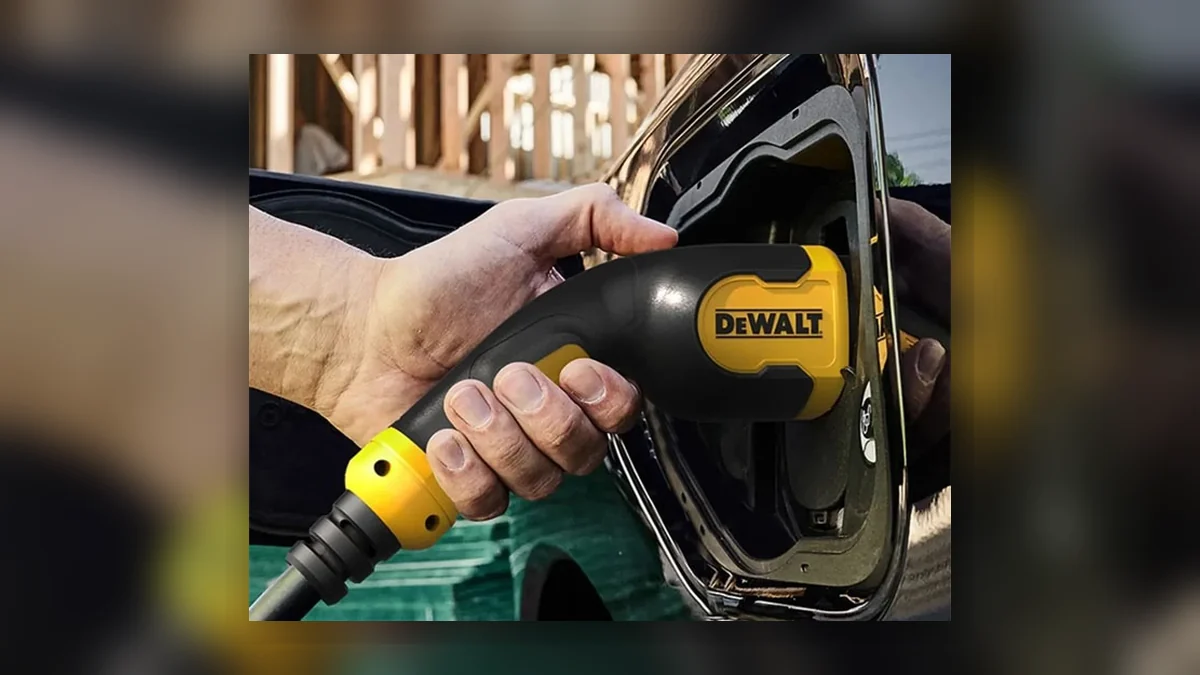
If you are running an electric van or considering the switch, the charging question comes early and the jargon around it is unnecessarily confusing. This guide cuts through the charger types, explains what the numbers mean in practical terms, and maps them to the three scenarios most UK tradespeople face: charging at home, at a yard or depot, and overnight at a customer's premises.
First: what do kW and kWh actually mean?
Charging speed is measured in kilowatts (kW). The higher the kW figure, the faster electricity goes into the battery. A 7kW charger delivers roughly twice the rate of a 3.7kW charger, and a 22kW charger delivers roughly three times a 7kW charger's rate.
The battery in an electric van is measured in kilowatt hours (kWh). Think of kWh as the size of the fuel tank. A van with a 75kWh battery on a 7kW charger takes about ten and a half hours to charge from flat to full. The same van on a 22kW charger (AC) would take under four hours, assuming the onboard charger supports that rate.
In practical terms: a full overnight charge at home on a 7kW wallbox is sufficient for most daily trade use within a reasonable radius. Problems arise when you are driving high daily mileage or returning to a partially charged van.
Home charging: the 7kW wallbox
For most tradespeople, a 7kW smart wallbox is the right answer for home charging. It uses a single-phase supply (the standard UK domestic connection) and can add around 40 to 50 miles of range per hour of charging. Left overnight, it will take most electric vans from low charge to full.
Key features to look for in a home wallbox: OZEV grant eligibility (the government has historically offered grants toward the installed cost of a home charger for EV owners), a tethered cable (permanently attached) or a socket for a Type 2 cable, and smart scheduling that lets you set off-peak charging windows to reduce the electricity cost.
Installation requires a qualified electrician. The process typically involves upgrading the consumer unit (or adding a dedicated circuit) and fitting the wallbox. Most installations complete in half a day.
Workplace and yard charging: 7kW to 22kW
If you run a fleet from a yard or depot, workplace chargers make the economics straightforward: vehicles charge overnight, arrive at the yard full each morning, and high-mileage vehicles have the option of a top-up during the working day.
7kW chargers per bay suit most small fleets where vehicles are parked for extended periods (eight hours or more). For higher turnover, where vans are arriving and leaving throughout the day, 22kW AC chargers reduce the time each vehicle needs to stay connected.
Workplace chargers also come in pod-style units that can serve multiple bays from a single connection, which reduces installation cost per bay on a larger fleet.
The Workplace Charging Scheme (WCS) provides support toward the cost of buying and installing workplace EV charge points. Check current eligibility criteria with an OZEV-approved installer.
Portable charging: EVSE cables and emergency options
For tradespeople who regularly stay away, or who work at customer premises with no public charger nearby, a portable EVSE (Electric Vehicle Supply Equipment) cable is the practical solution.
A portable EVSE cable connects the van to a standard 13A socket via a three-pin plug. Charging rate is slow, around 2.3kW, which adds roughly ten to twelve miles of range per hour. Overnight on a standard socket, that is around 100 miles of range added, which covers most intra-city work patterns.
If you need faster portable charging, some EVSE cables work with Commando (industrial) 32A sockets. These are common in workshop environments and commercial premises. A 32A single-phase supply through a Type 2 cable can deliver up to 7.4kW, roughly equivalent to a home wallbox.
DC rapid charging: for motorway and long distance
DC (direct current) rapid chargers bypass the van's onboard AC charger entirely and push power directly into the battery. Speeds range from 50kW at older public rapid chargers to 150kW or more at newer installations.
These are not installed at homes or most workplaces. They are the chargers at motorway services, fuel retailers, and public charging hubs. For long-distance trade journeys, a 30-minute stop at a 50kW rapid charger adds 80 to 100 miles of range on most electric vans.
DeWalt and trade-brand EV tools
ITS Hub's guide references DeWalt in the context of EV charging equipment, which points to the emerging category of trade-branded EV charge management tools. DeWalt and other power tool brands are beginning to apply their expertise in portable power to EV accessories: portable EVSE cables branded for trade use, adapted for tool vans, with the durability expected of site equipment rather than consumer charging accessories.