
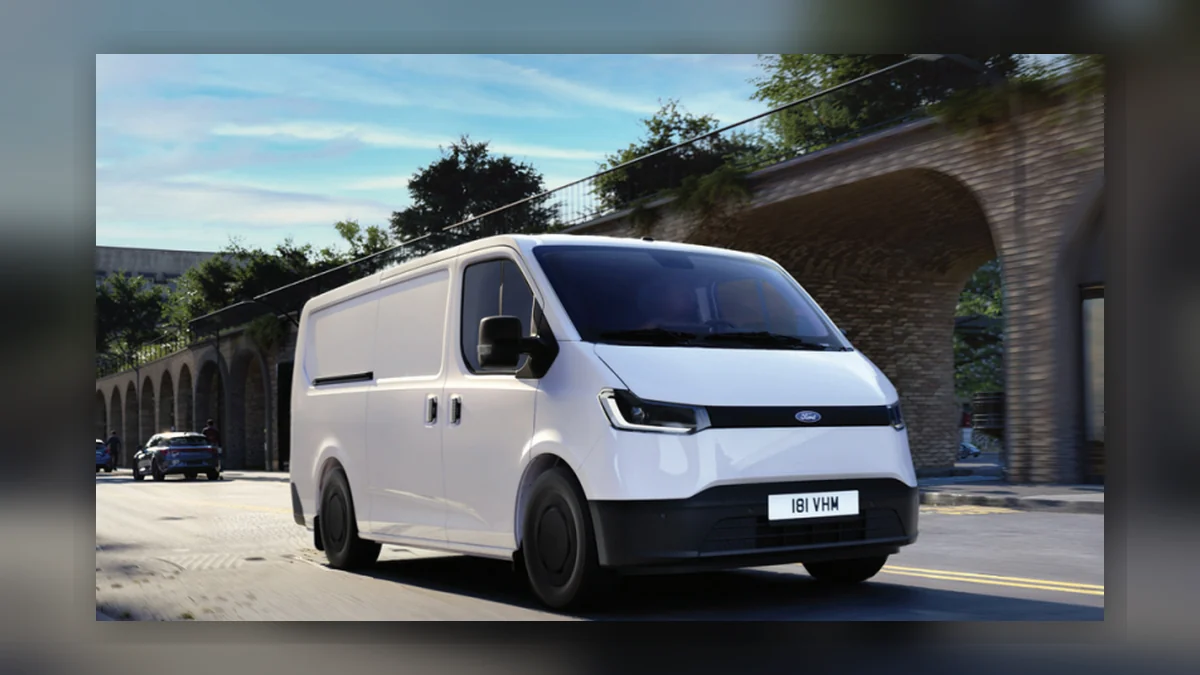
Image credit: Ford / Professional Builder (reference only)
---
Meta
---
Ford has released details of its latest trade-oriented vehicles for the UK market, with the lineup spanning both conventional and electric options at a time when trades are increasingly being asked to consider the practicality of electric commercial vehicles for daily work.
The range centres on two main additions: the Transit City and the Ford Explorer Van. Both are aimed at tradespeople as primary work vehicles, and each occupies a different niche in how and where a trade van typically operates.
---
Ford Transit City: the urban trade van
The Transit City variant is tailored for trades operating predominantly in urban and suburban environments. Tighter access, congestion zones, and the reality of parking in residential streets where a long-wheelbase Transit simply does not fit comfortably are the scenarios it addresses.
Dimensions matter considerably for urban trade use. A van that cannot park close to the job, or that requires a three-point turn on every residential cul-de-sac, costs time. The Transit City's configuration prioritises manoeuvrability without giving up too much of the load space that makes a trade van functional.
Urban Congestion Charge and Clean Air Zone compliance is a factor for trades working in city centres. London's Ultra Low Emission Zone, Manchester's Clean Air Zone, and similar schemes in other UK cities directly affect operating costs for non-compliant vehicles. Current versions of the Transit City range include MHEV (mild hybrid electric vehicle) options that reduce emissions and improve fuel economy in stop-start urban driving conditions.
---
Ford Explorer Van: electric for trades
The Explorer Van is Ford's electric option for tradespeople, built on the Explorer platform and adapted for commercial use. Range anxiety remains the primary concern for trades considering electric vans, and the practical answer depends heavily on the type of work and the daily mileage involved.
For trades who start and end the day at a fixed depot or home base where overnight charging is available, electric operation fits naturally into the routine. For those with highly variable routes, multi-site days, or long-distance travel that exceeds the van's range, the calculation is more complex.
The Explorer Van offers a range figure that suits most urban and suburban trade day use within its charge. Payload is always worth checking carefully on electric commercial vehicles because battery weight directly reduces the load capacity available for tools, materials, and equipment.
Ford's van range, including the Explorer, qualifies for workplace charging infrastructure grants in the UK where eligible, which reduces the upfront cost of installing a charge point at a depot or workshop.
---
The broader shift in trade vehicle fleets
The Ford range update is a signal of where commercial vehicles are heading. Clean Air Zone expansion, rising fuel costs, and corporate fleet emission targets are all pushing trades toward lower-emission options sooner than many expected. The practical reality is that the charging infrastructure and range capability now available in electric vans has crossed a threshold where they are genuinely usable for a large portion of trades' daily work.
At the same time, Ford continues to develop its conventional Transit range, recognising that not every trade is in a position to switch yet, and not every use case suits electric.
---
What to assess when choosing a trade van
Load capacity versus payload. These are different things. Load capacity refers to the physical volume available in the van. Payload is the maximum weight you can legally carry. Heavy tool kits, materials, and loaded racking systems add up fast, and the rated payload is the legal limit, not a guideline.
Wheelbase and height choice. Longer and taller vans carry more but cost more to insure, are harder to park, and may not qualify for multi-storey car parks. For city-heavy work, a short-wheelbase medium-roof is often the practical optimum.
Fuel type and zone compliance. Check whether the vehicle meets the requirements for the zones you regularly work in. The information is available on each Clean Air Zone authority's website.
---