The word "drill" covers a lot of ground. Ask four tradespeople what drill they use and you will get four different answers, and they will probably all be right for their particular work. The combi drill, the SDS, and the impact driver are genuinely different tools with genuinely different jobs, and the one you reach for most should match what you actually spend your time doing.
This guide explains each type, where it excels, and how to figure out which one belongs in your bag.
---
The Combi Drill: The Generalist
The combi drill, also called a combination drill or combi hammer drill, is the most versatile option. It does three things in a single body: it drills, it drives screws, and it hammers into masonry using a vibration action on the chuck.
The name "combi" comes from those combined functions. A switch or mode selector moves the tool between three settings:
Drill only: The chuck rotates and the clutch is set to allow the motor to stall rather than strip the screw. Used for standard drilling in wood, metal, and plastics.
Hammer drill: Rotation plus a rapid percussive action on the chuck, which vibrates the bit forward and backward as it spins. This is the masonry mode. The vibration helps the carbide masonry bit chip away at brick or block while the rotation removes debris.
Driver (screwdriver mode): The clutch is set to disengage at a user-selected torque level, preventing the screw from being driven too deep or the slot from being stripped.
The combi drill is the right choice if your work spans multiple material types and you need a single tool to handle all of them. For maintenance engineers, general builders, plumbers, and anyone doing varied work, the combi drill is the day-to-day workhorse.
What it is not good at: Heavy masonry drilling into concrete or hard block, where the hammer action in a combi is underpowered compared to a dedicated SDS. The hammer mechanism on a combi is suitable for brick and lightweight block; it struggles with dense concrete.
---
The SDS Drill: Built for Masonry
SDS stands for Slotted Drive System, which refers to the chuck design rather than the overall tool type. The SDS chuck holds the bit via slots in the shank, which allows the bit to move fractionally within the chuck. This design means the hammer mechanism in the tool transmits its impact force directly into the bit and into the material being drilled, rather than being absorbed by the chuck.
The result is a significantly more powerful hammer action than any combi drill. An SDS drill can cut through dense concrete, reinforced block, and stone far faster than a combi hammer drill working on the same material.
SDS drills come in two main formats:
SDS Plus: The standard trade format. SDS Plus bits use a shank with two open and two closed slots. This is the correct tool for drilling through brick, block, hard concrete, and stone in applications up to around 26mm diameter. Fixings into concrete walls, cable runs through floors, pipe penetrations through blockwork, and structural fixings are all SDS Plus territory.
SDS Max: Larger, heavier, built for the most demanding applications. SDS Max bits have a bigger shank and the tool is designed for drilling in structural concrete, breaking out material with a chisel attachment, and high-volume drilling at large diameters. This is specialist territory rather than everyday trade use.
What SDS drills are not: They are not designed for screwdriving or precision drilling in wood. The hammer mechanism runs in the background and cannot be disabled in the same way as a combi drill. For screwdriving, reach for a different tool.
---
The Impact Driver: For Fastening, Not Drilling
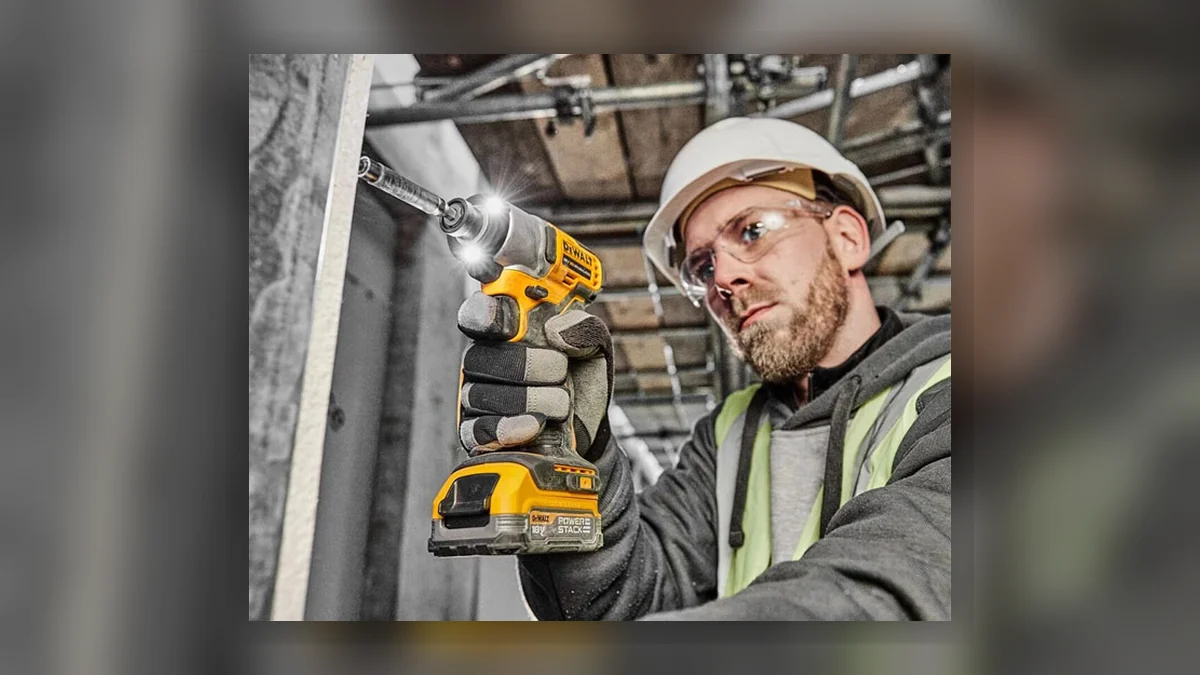
The impact driver is frequently misunderstood as a type of drill. It is not, strictly speaking. It is a fastening tool with a quarter-inch hex chuck designed to accept hex-shank driver bits.
The mechanism works differently from a combi drill. When resistance increases during driving, an impact driver engages an internal striking mechanism that delivers rapid rotational blows, giving the fastener extra force rather than just spinning faster. This allows the tool to drive large fasteners, coach screws, and structural fixings without the torque fighting your grip.
What impact drivers are excellent at:
Driving screws at volume. Anyone who spends significant time screwing decking, cladding, subfloor sheets, or structural timber will work faster with an impact driver than with a combi drill in driver mode.
Driving coach screws and large hex-head fasteners. The hex chuck takes 8mm hex bit adapters for nut-running, and the impact mechanism handles the torque levels that would trip the clutch on a combi.
Removing seized screws. The impact action helps break loose fasteners that have corroded or stripped slightly.
What impact drivers are not good at: Precision screw depth control (the impact mechanism makes fine clutch adjustment less predictable), drilling holes cleanly, or any application where you need smooth rotation rather than hammered rotation.
---
How to Choose
The honest answer to "which drill should I buy?" is to look at what you spend most of your working time doing.
If you do varied work across wood, metal, and occasional masonry: A combi drill is your primary tool. You may want a dedicated impact driver for screwing-heavy work.
If your work regularly involves drilling fixings into concrete or hard masonry: An SDS Plus drill should be in your kit. Running a combi drill at hammer into hard concrete wears the tool out faster and is slower than using the right tool.
If you spend a lot of time driving screws, coach bolts, or large fixings: An impact driver makes a real difference in speed and fatigue. Many tradespeople with a combi drill add an impact driver once they experience how much faster screwing work becomes.
For most tradespeople in general building, plumbing, or electrical work, the practical answer is a combi drill plus an impact driver as the core cordless pair. The SDS is the third tool, added when the work demands it.
---
Voltage and Battery Platform Considerations
Cordless drills in the UK trade market are predominantly 18V, which represents the balance between power and tool weight for professional use. 12V tools exist and are genuinely useful for lighter work or confined space applications, but 18V is the trade standard.
The battery platform is as important as the tool itself. Once you commit to a platform (Milwaukee M18, Makita LXT, DeWalt XR, or equivalent), your batteries, chargers, and tools all cross over. This makes buying bare tools (without battery or charger) for the second, third, and fourth tool in your kit significantly cheaper than buying kits each time.
If you are starting from scratch, choosing a brand based on which complete system suits your work makes more sense than choosing a single tool in isolation.
---