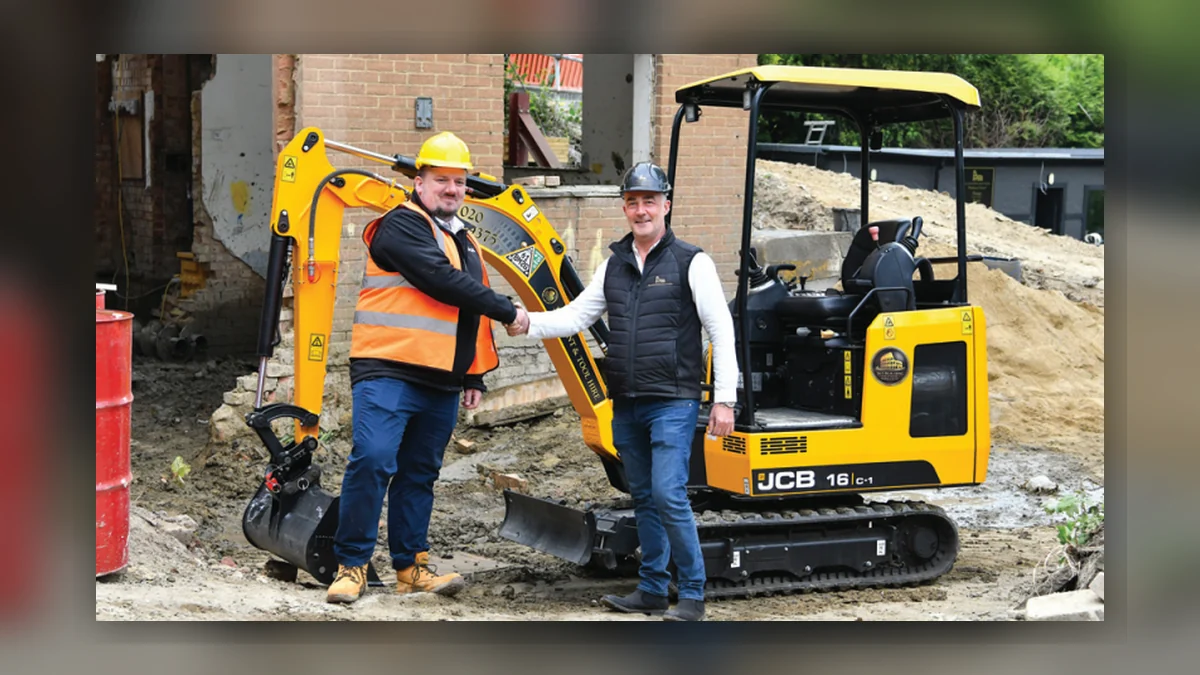
JCB has added a new finance option called FlexiBuy, designed specifically around mini excavator purchase for SME contractors. The product takes inspiration from automotive business contract purchase, which is a different model from the hire purchase agreements that have been the default in plant finance for decades. It is worth understanding what that difference actually means before walking into a dealer conversation.
Mini excavators (machines typically from 1 tonne to 6 tonnes operating weight) are the most commonly financed piece of plant for smaller groundworks and landscaping contractors. They cover enough jobs to earn back their cost and they are small enough to transport on a standard trailer without a specialist low-loader. The purchase cost of a mid-range 3-tonne mini excavator sits broadly between £30,000 and £65,000 depending on specification, attachments and age. That is a significant capital outlay for a firm with five or fewer staff.
The four main ways to finance plant in the UK
Hire purchase
The traditional route. You put down a deposit, typically 10 to 20 percent of the machine's purchase price, then pay fixed monthly instalments over an agreed term, most commonly 36 to 60 months. At the end of the term, you own the machine outright.
The advantage is simplicity and predictability. You know what you're paying each month, and at the end you have an asset on your balance sheet. You can also claim capital allowances on the machine's purchase price against your tax bill, which reduces the real cost.
The catch is the deposit. For a £45,000 mini excavator, a 15 percent deposit is £6,750 of cash out of the door before the machine turns a wheel. If you have three other deposits outstanding on a van, a generator and a trailer, cash flow tightens fast.
Finance lease
You pay monthly instalments for a fixed term, but at the end of the term you do not own the machine. You hand it back (or sometimes arrange to sell it on the lender's behalf and keep a share of the residual value). The finance company, not you, carries the risk that the machine's market value at the end of the term is lower than expected.
Monthly payments are lower than hire purchase for the same machine because you are not paying for full ownership. However, you cannot claim capital allowances because you do not own the asset. You can deduct the lease payments as a business expense instead.
Finance lease suits businesses that want low monthly outgoings and prefer to upgrade equipment regularly rather than accumulate owned assets. It also avoids the residual-value risk on machines that might depreciate sharply.
Operating lease (contract hire)
Closer to renting than financing. You pay monthly for the use of the machine over a fixed period. At the end, you hand it back. There is typically a usage limit (hours of operation, sometimes mileage for vehicles). If you exceed it, there are excess charges.
Operating leases are common in commercial vehicle fleets. They are becoming more common for smaller plant. The appeal is that maintenance and sometimes breakdown cover are bundled into the agreement. The downside is that you own nothing at the end and costs per machine-hour can be higher than outright purchase over a long ownership period.
JCB FlexiBuy: the new option
JCB describes FlexiBuy as inspired by the automotive industry's Business Contract Purchase model. In a standard automotive BCP, you pay monthly instalments and at the end of the term, you have three options: hand the vehicle back (if it is worth less than a pre-agreed Guaranteed Minimum Future Value), pay a final lump sum (the "balloon payment") to own it outright, or part-exchange it for a new model using any equity above the GMFV.
If FlexiBuy follows this structure for mini excavators, it would mean lower monthly payments than hire purchase (because the balloon reduces the amount amortised monthly), with the flexibility to decide at the end of the term whether to own the machine or move on to a newer one without the residual-value risk that comes with a finance lease. The machine's GMFV is pre-agreed at the start, so there is no unpleasant surprise about what it's worth in three years.
The practical detail of FlexiBuy's deposit requirements, term lengths, GMFV percentages, and which dealerships are offering it was not publicly confirmed at the time of writing. Ask your JCB dealer directly about current terms before quoting this model to a client or assuming it replaces existing finance options.
What to ask before signing any plant finance agreement
Whatever the route, ask these questions before putting pen to paper:
What is the effective annual percentage rate (APR)? Finance companies do not always quote APR prominently. Ask for it explicitly and compare it across options rather than comparing monthly payment figures alone. A lower monthly payment over a longer term can cost more overall than a higher monthly payment over a shorter one.
What is included and what is excluded? Does the agreement include any maintenance provision? Is breakdown assistance included? What happens if you exceed the stated working hours or if the machine is written off? Insurance, wear-and-tear standards and termination conditions should all be in the agreement.
Can I add attachments? If you plan to add a tilt-rotator, a compactor plate or a hydraulic breaker after purchase, confirm whether adding non-OEM attachments affects the warranty or the finance agreement terms.
What are the early settlement terms? Some hire purchase agreements carry settlement penalties if you pay off early. Know this before you commit, especially if the business's cash position might change.
Who owns the machine during the finance period? In hire purchase, you (usually) own the machine from day one even though the lender has a charge on it. In a finance lease, the lender owns it. This matters for insurance, for capital allowance claims, and for what happens if your business hits a difficult period.
Does size of machine change the finance options available?
Yes. Larger machines above 5 to 6 tonnes operating weight, or high-value attachments, often require more specialist plant finance providers. The mainstream banks and motor finance divisions that offer standard hire purchase products are most active in the 1 to 6-tonne mini excavator segment. For 8-tonne-plus machines, JCB Finance, Liebherr Financial Services, Volvo Financial Services and similar OEM-backed finance arms are often the most competitive.
For used machines bought from a dealer, most of the same options apply, though maximum term lengths and advance amounts may be lower depending on the machine's age and condition. Finance for machines over 8 to 10 years old is harder to arrange through mainstream lenders.
Tax considerations for plant purchase
On outright purchase or hire purchase, the machine qualifies for capital allowances. The current Annual Investment Allowance (AIA) in the UK allows businesses to deduct 100 percent of the machine's cost against taxable profits in the year of purchase, up to the current AIA limit (check with an accountant for the current limit, which changes periodically in Budget statements). This means a £45,000 excavator could reduce your taxable profit by £45,000 in year one, reducing the tax bill significantly.
On a finance lease or operating lease, you cannot claim capital allowances, but you can deduct the lease payments as a revenue expense. The tax timing is different. For businesses with fluctuating profit years, one model may be more advantageous than the other. This is accountant territory: get specific advice before deciding.
VAT on plant purchases is reclaimable if you are VAT registered and the machine is used in a VAT-taxable business. Monthly finance payments on HP agreements are not normally VAT-able (the VAT is due upfront on the full purchase price). Finance lease payments are VAT-able on each monthly instalment. Again, ask the lender explicitly so there are no surprises on the first payment date.