
There's a real appeal to a hand-built wooden tool chest — dovetailed corners, fitted trays, and the kind of character that comes only from years of workshop use. The problem, as a recent trade piece on carpenters' tool storage points out, starts the moment that chest has to leave the workshop. A traditional chest is designed to sit beside a bench in a fixed spot, not to survive being lifted in and out of a van, dropped on a tailgate, or left on a half-finished floor while a joiner works around it.
What changes when a tool box goes mobile
A workshop chest is optimised for capacity and organisation in a static location — deep trays, a heavy lid, and joinery that assumes it will never be picked up and carried far. Once that same box is expected to travel daily, different things start to matter: overall weight when loaded (a wooden chest full of tools can be genuinely difficult for one person to lift into a van), impact resistance if it's dropped or knocked during loading, and weather resistance if it sits in an unheated van or gets rained on getting from van to door.
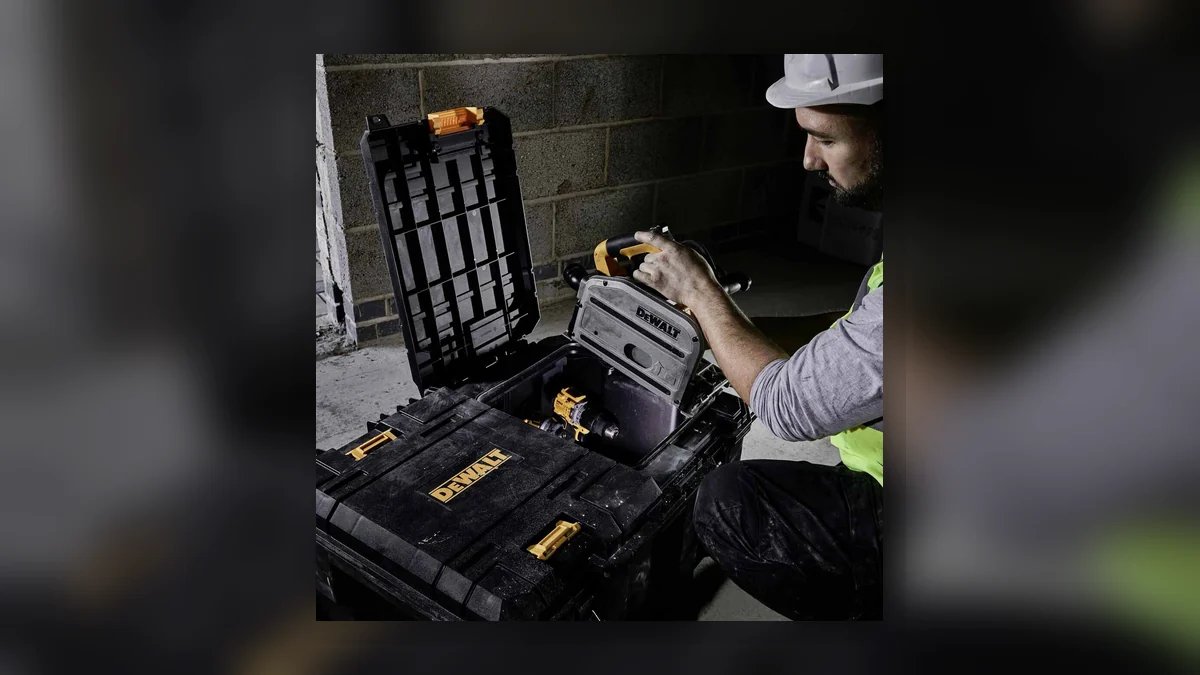
Modern mobile tool boxes — typically rotomoulded plastic or reinforced composite construction, often on wheels or with a stackable modular system — are built around those constraints instead. Key things worth checking before buying one for daily site use:
- Load rating and wheel quality — a wheeled box is only genuinely useful if the wheels and axle can take a fully loaded weight over rough ground, kerbs and site debris without the frame flexing or the wheels seizing.
- Weatherproofing — a gasket-sealed lid keeps tools dry in the back of an open van or on a wet site, which a traditional wooden lid does not offer.
- Modularity — stackable or clip-together systems let a joiner carry only what a specific job needs rather than one oversized box for everything, which also spreads the load across smaller, more liftable units.
- Lockability — tool theft from vans is a persistent problem in UK trades, and a lockable box adds a layer of security a traditional chest generally doesn't.
The trade-off
None of this makes a hand-built wooden chest a bad tool — it's still an excellent choice for a fixed workshop location where character, capacity and traditional joinery matter more than portability. The decision point is simply how often the box needs to leave the workshop. A joiner working primarily on-site, moving between vans and jobs daily, is generally better served by tool storage designed for that use case, keeping the wooden chest as a static home-base unit for tools that don't need to travel.
---