
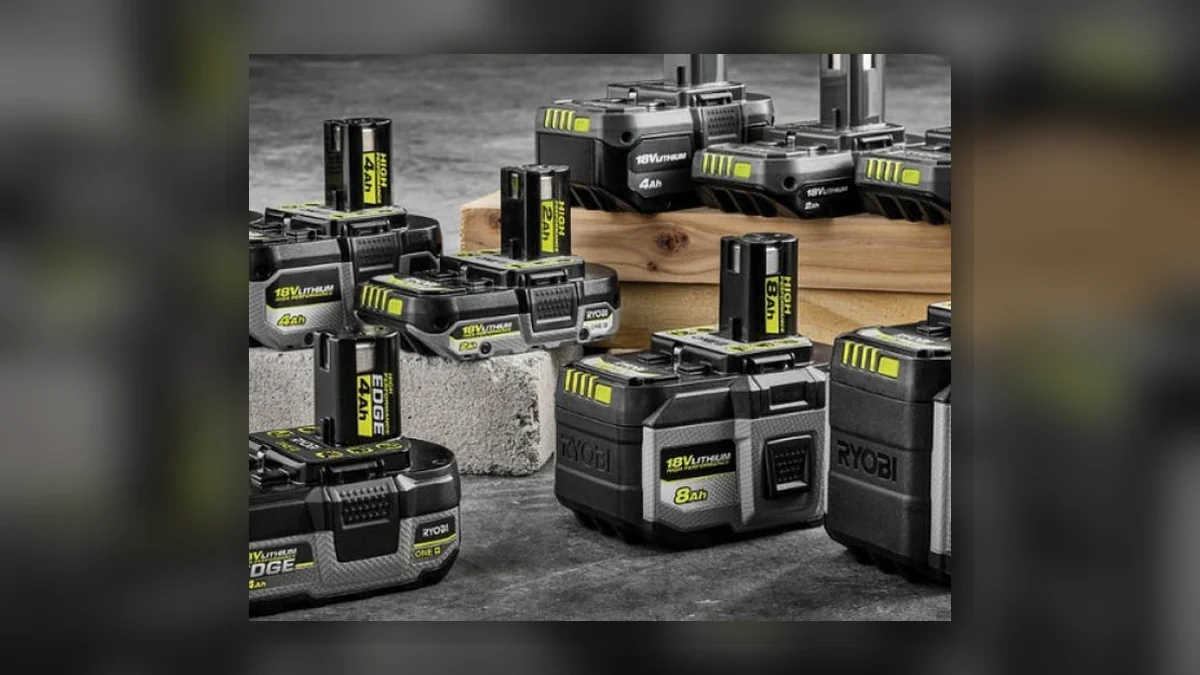
The Ryobi ONE+ platform is one of the most widely used DIY and light-trade cordless systems in the UK. The appeal is straightforward: a large family of tools, all running from the same battery type. Buy one battery, and it will power your drill, your circular saw, your jigsaw, your sander, your light, and dozens more tools in the same family.
But the reality of the ONE+ platform is slightly more layered than the headline suggests. Different tools in the range need different voltages, and understanding which batteries go where prevents buying a battery that will not do what you assumed.
---
How the ONE+ System Works
The ONE+ name refers to Ryobi's commitment to a shared battery platform across its product range. The concept is that when you invest in a Ryobi battery, you are investing in a system rather than a single tool. Tools come and go; the battery investment carries forward.
The physical connector used across the ONE+ range is consistent. A ONE+ battery will slot into any ONE+ tool physically. But voltage is the variable that determines whether the tool will operate and at what performance level.
---
The Main Voltage Tiers
18V ONE+ (the core platform)
The 18V ONE+ range is the heart of the Ryobi cordless system and covers the majority of the product line. Drills, drivers, circular saws, jigsaws, sanders, multi-tools, reciprocating saws, hedge trimmers, string trimmers, vacuums, radios, lights, and many more are all 18V ONE+ tools. This is the tier to build around if you are new to the Ryobi platform.
18V ONE+ batteries come in various amp-hour ratings: 1.5 Ah, 2 Ah, 4 Ah, and 5 Ah are the common options. The amp-hour rating determines how long the charge lasts, not what the battery can power. A 1.5 Ah battery will run any 18V ONE+ tool; it will simply run for less time per charge than a 5 Ah battery. Heavier tools like circular saws drain a battery faster than lighter tools like drills.
36V (Twin 18V configuration)
Some Ryobi tools in the ONE+ range, particularly more demanding outdoor tools like large lawnmowers, require 36V. This is not a different battery. It is achieved by connecting two 18V batteries together using a dual-port system within the tool. This means you need two batteries to run a 36V tool, but those same batteries are individually usable in any 18V ONE+ tool. It is an elegant solution that avoids introducing a separate battery format.
If you already own 18V ONE+ batteries and are buying a 36V Ryobi tool, you can run the new tool using your existing batteries in pairs.
HP (High Performance) Batteries
Ryobi has introduced an HP (High Performance) range within the broader ONE+ family. These batteries use the same physical connector and the same 18V rating, but they deliver power differently, with higher peak output that suits demanding tools like angle grinders and high-torque combi drills under heavy load.
HP batteries are backwards compatible with standard ONE+ tools. An HP battery will run any 18V ONE+ tool. Standard 18V batteries will also physically fit HP tools, but they may limit the performance of the tool under heavy load because they cannot deliver the same peak current.
---
What Is Not Cross-Compatible
Ryobi also makes tools outside the ONE+ family, including corded tools and some specialist equipment. These do not take ONE+ batteries for obvious reasons.
Older Ryobi products from before the ONE+ platform was established may use different battery connectors entirely. The ONE+ connector is specific to the ONE+ range and will not fit physically into older models.
Ryobi's 40V and 48V garden power equipment (larger ride-on style equipment and specific heavy-duty outdoor tools) uses separate battery systems that are not ONE+ compatible.
---
Building a ONE+ System Sensibly
For someone starting from scratch with Ryobi ONE+, the practical approach is:
1. Start with a starter kit that includes a battery and charger alongside a core tool. This sets you up with the battery format and a charger before you begin expanding.
2. Buy bare tools once you have the batteries. Bare tools (without battery or charger included) are cheaper than kits, so each subsequent tool in the same system costs less.
3. Consider battery capacity based on how you intend to use the tools. For occasional DIY, 2 Ah batteries are fine. For regular or sustained use, 4 Ah or 5 Ah batteries give better run time and are worth the additional cost.
4. Check the product listing before buying any new Ryobi tool to confirm it is in the ONE+ 18V family rather than a different voltage tier. The ONE+ branding is clearly marked, but the voltage tier is worth confirming.
---
Charging ONE+ Batteries
All ONE+ batteries charge from Ryobi ONE+ chargers. Standard chargers handle one battery at a time. Dual chargers can handle two simultaneously. Rapid chargers reduce charge time considerably for larger batteries.
If you are running multiple tools on a site or in a workshop, having two or three batteries in rotation with a charger running means you rarely wait for power.
---