External wall insulation is one of the highest-volume retrofit activities in the UK right now. With millions of pre-2000 cavity and solid-wall properties in line for energy upgrades, EWI contractors are under sustained delivery pressure, and any installation method that speeds up the process without compromising quality earns serious attention. Saint-Gobain Exterior Solutions has launched a Gas Fired Fixings method that does exactly that.
---
What are Gas Fired Fixings?
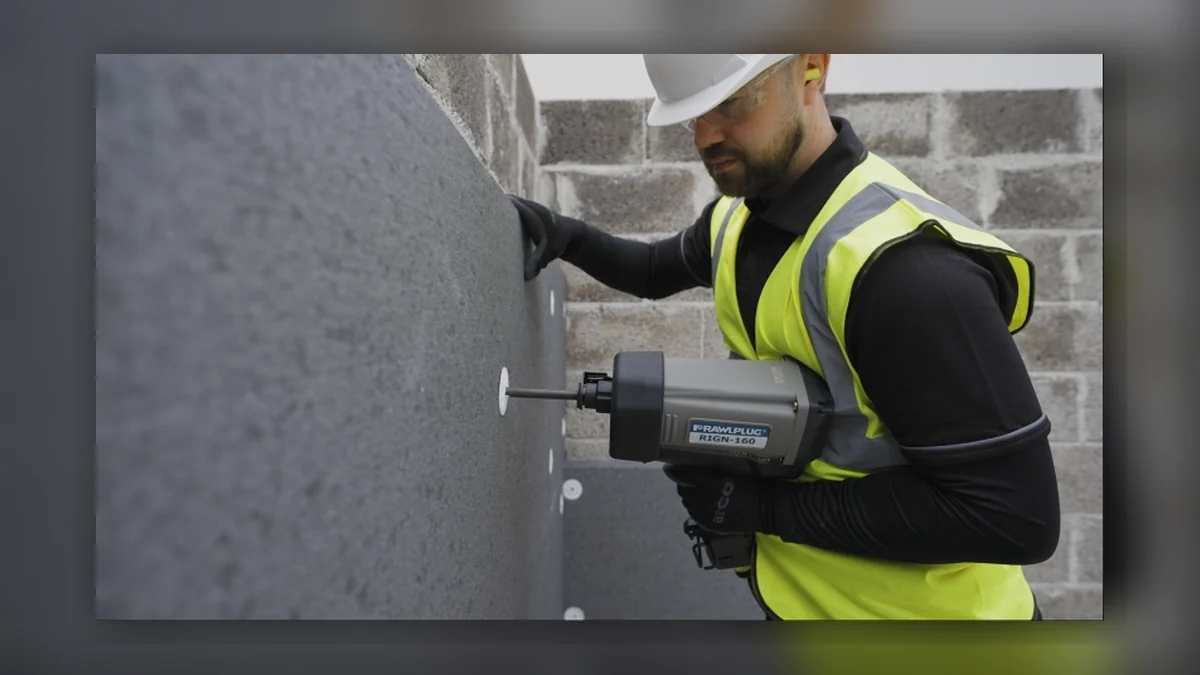
Gas Fired Fixings use a gas-cartridge-powered tool, similar in principle to a first-fix gas nail gun, to drive fixings rapidly into the substrate. The difference is that these fixings are designed specifically for attaching insulation boards to masonry and concrete walls, rather than nailing timber to timber.
The traditional alternative involves drilling a pilot hole with a hammer drill, inserting a plastic or metal fixing by hand, and tapping it flush. Multiply that across the fixings required for a full facade, and it adds up to significant time on every dwelling.
With a gas-fired tool, the fixing is loaded into the tool, positioned on the board and substrate, and driven in a single motion. No pre-drilling. No separate plugging step. The speed advantage across a full external wall insulation job is substantial.
---
Why does it matter for UK EWI work?
The UK retrofit sector is operating under real delivery targets. Social housing providers, local authorities and private landlords are all facing pressure to improve the energy performance of existing stock, and EWI is one of the primary methods for achieving that on solid-wall properties.
Labour productivity on EWI is one of the biggest cost variables in a contract. If a crew can fix more boards per day using gas-fired tooling versus the conventional drill-and-fix method, the difference feeds directly into programme delivery and project margin.
Saint-Gobain Exterior Solutions sits across multiple product lines relevant to EWI, including adhesives, renders and insulation systems, so a gas-fired fixing method developed within the same family means compatibility with existing approved system specifications.
---
What substrates does it work on?
The Saint-Gobain announcement refers to masonry substrates, which covers the majority of UK external walls: brick, blockwork and concrete. Aerated concrete blocks and soft or crumbling mortar joints require different approaches regardless of fixing method, and the system will have substrate compatibility guidance as part of any full specification.
Contractors using gas-fired fixings should check the system specification sheet for minimum compressive strength requirements of the substrate before applying to older or mixed-construction walls.
---
Tool and consumable considerations
Gas-fired fixing tools require gas cartridges and a supply of the appropriate fixings as consumables. The economics of consumable cost versus labour time saved tend to work out favourably on large-scale contracts, but smaller one-off jobs may see a different cost balance.
The tools themselves are manufactured to a high cycle life expectation, similar to gas nail guns used in first and second fix carpentry, and maintenance requirements are modest for site conditions.
---
Who should pay attention to this?
EWI contractors, particularly those operating at scale on social housing, local authority or commercial retrofit programmes. Specifiers working on approved system specifications will also want to understand how gas-fired fixings interact with current system certification.
Building control bodies and warranty providers may require evidence that the system has been tested in the configuration specified, so early engagement with Saint-Gobain Exterior Solutions on system compliance documentation is advisable before specifying on a project.
---