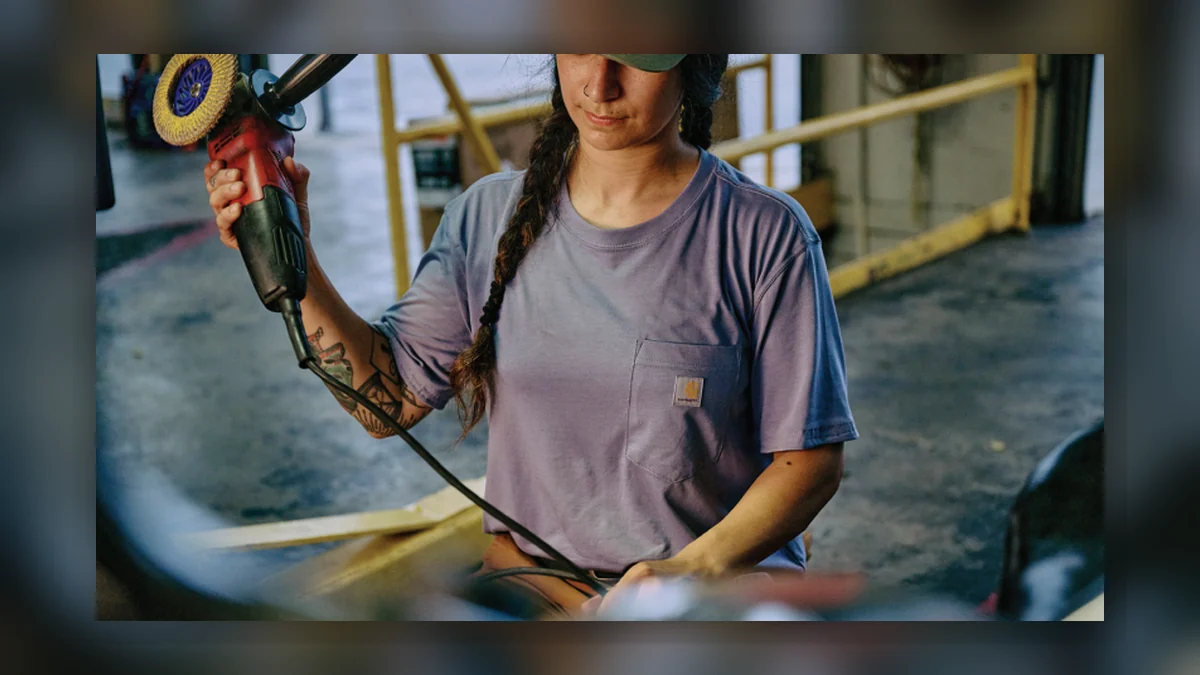
British summer does not always cooperate, but when it does it creates a different set of problems on site. Heavy cotton work shirts trap heat. Dark fabrics absorb it. Synthetic materials that shed water in winter can turn into a greenhouse in June. And while trades are well drilled on staying warm and dry, the culture around staying cool and sun-safe lags some way behind.
Carhartt's Nick Poulson has offered practical guidance on what to look for in summer site workwear -- and the core message is that breathability and UV protection are two different things that a good garment needs to handle simultaneously.
---
The Problem with Standard Workwear in Summer
Most workwear is designed around the British default: damp, cool, overcast conditions. Heavy cotton provides warmth and durability. Multiple layers offer flexibility. That works for nine months of the year.
In sustained summer heat -- particularly for trades working outdoors, at height, or in south-facing locations -- the same garments become a problem. Heat builds up inside the clothing, sweat cannot escape fast enough, and the result is discomfort that affects concentration, decision-making, and ultimately safety. Heat exhaustion and heat stroke are genuine risks for outdoor workers in peak summer conditions and are regularly underestimated.
The solution is not to strip down. Removing layers removes UV protection and can expose trades to painful sunburn within an hour of direct sun. The right answer is lightweight, breathable workwear that actively manages heat and provides meaningful UV protection at the same time.
---
What Breathable Actually Means in Workwear
Breathability in workwear refers to how easily moisture vapour (sweat) passes through the fabric. A breathable fabric wicks moisture away from the skin and allows it to evaporate, which cools the body.
The key factors:
Fabric type: Moisture-wicking synthetic blends and treated natural fibres move sweat away from the skin more effectively than plain cotton. A cotton-polyester blend with a moisture management finish can perform significantly better than unfinished cotton in the same ambient temperature.
Weight: A lightweight fabric lets air move through it more easily. A 200gsm lightweight work shirt will feel noticeably cooler than a 380gsm standard work shirt in the same fabric. The lighter garment typically offers less abrasion resistance -- that trade-off is worth understanding.
Construction: Ventilation panels, mesh inserts, and open weave zones in armpit areas and across the back allow air movement in the areas where the body generates most heat. These are worth looking for in any summer site garment.
Colour: Pale colours reflect solar radiation rather than absorbing it. Dark work trousers and shirts absorb heat from the sun directly. In peak summer, light-coloured workwear on exposed outdoor sites is a practical choice, not just an aesthetic one.
---
UPF Ratings: What They Mean and Why They Matter
UPF (Ultraviolet Protection Factor) measures how much UV radiation a fabric blocks. It is to clothing what SPF is to sunscreen, though the testing methodology differs.
A garment rated UPF 15 blocks roughly 93% of UV radiation. A UPF 50 garment blocks 98%. A UPF 50+ (the highest classification) blocks 98% or more consistently.
Standard unrated cotton workwear blocks between 50% and 70% of UV radiation when dry -- and less when it is wet with sweat, which is exactly the condition on a hot day. A UPF 50 rated garment provides significantly more consistent protection regardless of whether the fabric is damp.
For trades working outdoors through the day in summer -- groundworkers, roofers, scaffolders, landscapers, bricklayers -- UPF-rated clothing provides ongoing UV protection across the covered areas of the body throughout the working day, without requiring reapplication the way sunscreen does.
The remaining exposed areas -- face, neck, hands, any gaps at the wrist or collar -- still require sunscreen. UPF clothing and sunscreen work in combination rather than as alternatives.
---
Carhartt's Approach to Summer Site Workwear
Carhartt's trade workwear range includes summer-specific products built around breathable construction and UPF protection. The brand is well established in the UK trade market and has been making workwear designed for physical outdoor work for well over a century.
Nick Poulson's advice from Carhartt centres on treating summer workwear as a genuine functional investment rather than a seasonal afterthought. The specific recommendations are consistent with broader occupational health guidance:
Choose garments with a documented UPF rating rather than assuming any light fabric provides meaningful UV protection.
Prioritise moisture management over pure weight -- a slightly heavier garment that moves sweat effectively can feel cooler than a lighter garment that traps it.
Consider the full working day and not just the hottest hour. A garment that performs at 9am, at 1pm, and at 4pm in mixed conditions is more useful than one optimised for a single temperature.
---
Practical Checklist for Summer Site Workwear
Before buying, check that the garment offers:
A UPF rating of 30 or higher (50+ preferred for prolonged outdoor exposure)
Moisture-wicking or quick-dry fabric treatment
Adequate ventilation -- underarm panels, mesh back panels, or open construction at key heat-generating zones
A fit that allows movement without the fabric clinging when damp
Durability appropriate to the trade -- a UPF shirt is of limited value if it cannot survive a season of regular site use and washing
---
What About Hydration?
Workwear manages external heat transfer, but internal heat management is equally important. Dehydration accelerates heat-related illness significantly. Trades working in summer heat should be drinking around 250ml of water every 20 minutes in high-temperature conditions -- roughly equivalent to a full pint every hour and a half.
Thirst is a lagging indicator. By the time you feel thirsty on a hot site, you are already mildly dehydrated. Build drinking into your work pattern rather than waiting to notice it.
---