
If you are rewiring a room in a house built before 2004, or extending a circuit from existing wiring, you will encounter two completely different sets of cable colours in the same property. This is not unusual. It is the normal situation for most UK residential rewires and first-fix electrical work. Understanding which colours mean what, and more importantly how to work safely where old and new meet, is essential for any competent electrician working in UK properties.
This guide covers single-phase domestic and light commercial wiring. Three-phase is included in the FAQ section.
---
Why the colours changed
The UK changed its electrical cable colour coding in 2004. This was part of harmonisation with European standards (IEC 60446 and the relevant CENELEC standards) that brought the UK system into line with the rest of Europe.
The change did not happen overnight. The new colour code was introduced in January 2004 and a transition period ran until March 2006. Any wiring installed after March 2006 should be in the new colours. Wiring installed before January 2004 will be in the old colours. Wiring installed during the transition period could legitimately be either.
This means any UK building wired before 2006, and particularly any building that has been extended or modified since, may contain both systems. Knowing the old colours is not an optional extra for electrical trades. It is a day-one requirement.
---
Old UK wiring colours (pre-2004)
These are the colours you will find in existing wiring in older UK properties:
| Core | Old Colour | |------|------------| | Live | Red | | Neutral | Black | | Earth | Green/Yellow stripe |
The earth colour has not changed between the old and new systems. Green and yellow stripe has always been earth in UK installations.
The important confusion risk: in the old system, black means neutral. In three-phase old-colour systems, black is also used for the neutral of the distribution system. When you encounter black cable in an older property, the first job is to confirm which system you are in.
---
New UK wiring colours (post-2004)
These are the colours used in all wiring carried out to current BS 7671 standards:
| Core | New Colour | |------|------------| | Live | Brown | | Neutral | Blue | | Earth | Green/Yellow stripe |
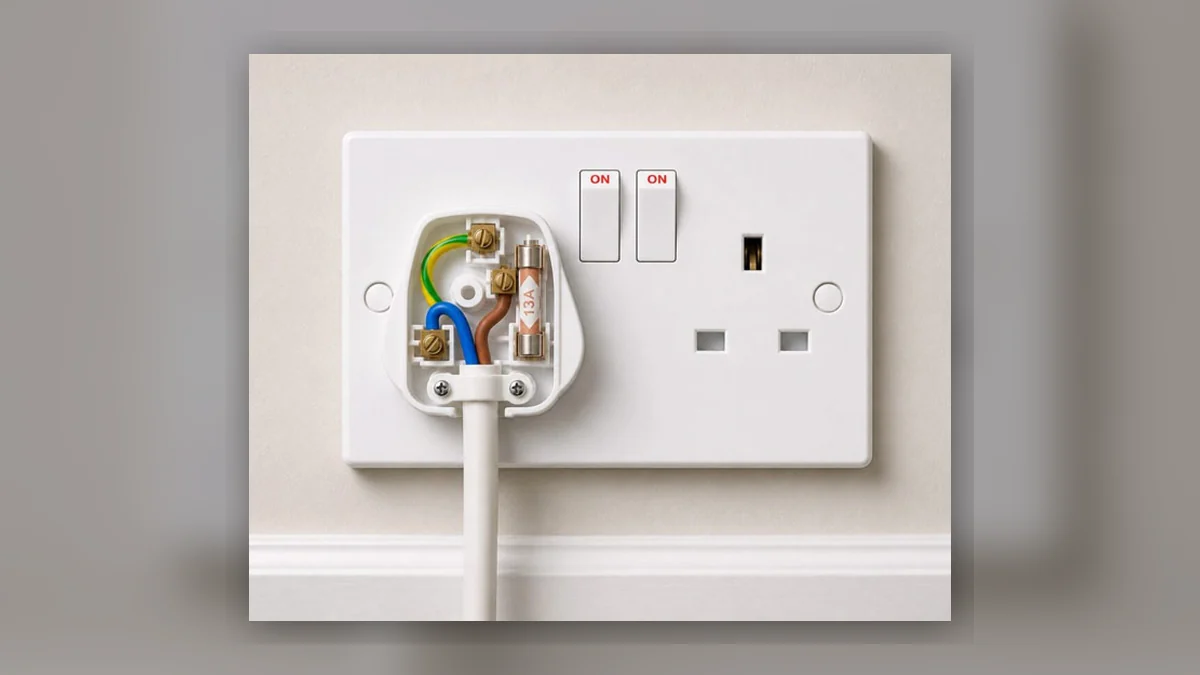
If you have replaced a plug on a UK extension lead or wired a standard 13A plug, you already know these colours. The mains plug colours (brown live, blue neutral, green/yellow earth) are the same as the new circuit wiring colours. This is deliberate.
---
The critical risk: black means two different things
The old system used black for neutral. The new system uses blue for neutral. That part is straightforward.
The danger point is three-phase wiring, or any situation where you encounter black cable in a new-colour installation. In new-colour three-phase systems, black is used as one of the line (live) conductors. This is the reverse of its meaning in old-colour single-phase wiring.
In a single-phase old-colour installation: black = neutral. In a new-colour three-phase installation: black = line 2 (live).
If you are working in a building that has had three-phase equipment installed more recently, while the single-phase circuits remain in old colours, you can have black-neutral and black-live in the same distribution board. This is the precise situation that causes accidents.
The 18th Edition Wiring Regulations (BS 7671:2018+A2:2022) address this through labelling and identification requirements, but the practical reality is that identifying the system before you touch anything is non-negotiable.
---
How to identify which system you are in
1. Check the installation date. An Electrical Installation Certificate (EIC) or Minor Works Certificate, if available, will state when the circuit was installed. 2. Look at the cable colours before opening anything. Old system: red and black. New system: brown and blue. 3. Check the earthing arrangement. Green/yellow earth is used in both systems, so the earth colour alone does not tell you which system you are in. 4. If you find mixed colours at a junction box or consumer unit, treat every conductor as potentially live until you have proved otherwise with a calibrated test instrument. Do not rely on colour alone in mixed installations. 5. Use a voltage indicator or multimeter to confirm which is live and which is neutral before connecting. BS 7671 requires you to identify conductors before connecting them.
---
Mixed installations: what the regulations say
Where old and new coloured cables meet (for example, when extending an old red-and-black circuit with new brown-and-blue cable), the connection point must be labelled. BS 7671 Regulation 514.14.1 requires a warning notice at every point where the old and new systems connect:
> "Caution: This installation has wiring to two versions of the wiring colour code and care should be taken before undertaking work."
This label is mandatory, not optional. Its absence does not mean the mixed system is not there. If you find a property with mixed colours and no warning labels, add them as part of any work you do.
---
Switching and control conductors
Single-core cables used as switching conductors (for example, the switched live in a ceiling rose loop) present an additional identification challenge. In old-colour installations, a single black core was sometimes used as a switching conductor (a live conductor, despite being coloured black). These should have been sleeved or taped in red or another colour to indicate that they were live, but this was not always done.
In new installations, switching conductors in grey or brown are used. Where a blue conductor (normally neutral) is used as a switching conductor, it must be marked with brown tape at both ends.
If you encounter a circuit where the colours do not match expected function, prove the circuit with test equipment before touching anything.
---
Three-phase colours: quick reference
| Core | Old Colour | New Colour | |------|------------|------------| | Phase 1 (Line 1) | Red | Brown | | Phase 2 (Line 2) | Yellow | Black | | Phase 3 (Line 3) | Blue | Grey | | Neutral | Black | Blue | | Earth | Green/Yellow | Green/Yellow |
Note the specific confusion risk: old-colour blue was a phase (live) conductor. New-colour blue is neutral. If you work across both systems, the same colour means the opposite function depending on which system you are in.
---
Flex colours: what about appliance cables?
Flexible cables (flex) used for appliances and portable equipment have always used the harmonised colour code in the UK, even before 2004. This is why mains flex has always been brown, blue, and green/yellow. The change in 2004 aligned fixed wiring with the flex colours that already existed.
---
What are the new UK wiring colours?
What are the old UK wiring colours?
When did UK wiring colours change?
Is old wiring safe to use?
What does a brown cable mean in electrical wiring?
What is the danger of mixing old and new wiring?
Do I need a label where old and new wiring connect?
What colour is earth in UK wiring?
What is a switched live and why does it matter for wiring colours?
Can a homeowner rewire their own house in the UK?
- ITS Hub: UK Wiring Colours Guide
- BS 7671:2018+A2:2022 Requirements for Electrical Installations (18th Edition Wiring Regulations)
- Health and Safety Executive: Electrical Safety guidance for the workplace