Loading a skip is one of the jobs that experienced builders have been doing the same way for decades. You pick up the material, carry or wheel it to the skip, and throw it in. It is straightforward but it is not without risk, particularly on busy urban sites with limited space, uneven ground, or heavy, awkward waste materials.
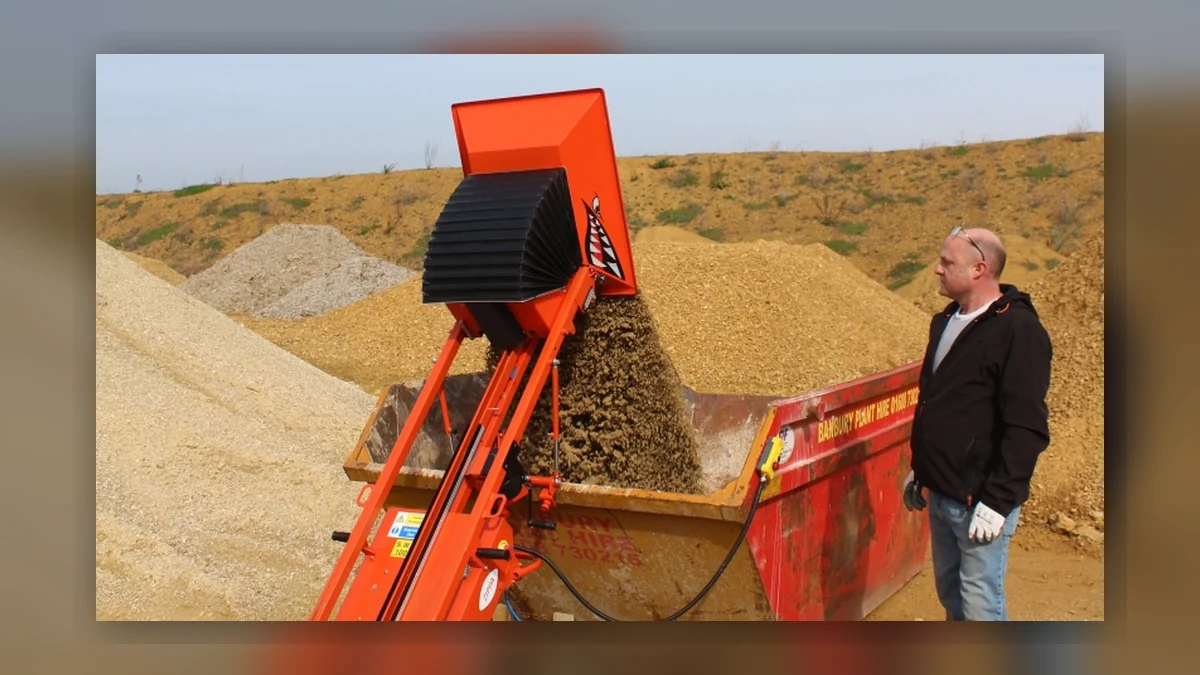
The Zippa Skip Loader is a machine designed to change that. General builder Steven Gaal demonstrated the Zippa for Professional Builder magazine recently, and the concept is simple enough: a remote-controlled loader that lets the operator stand well clear while the machine does the heavy work.
What Is the Zippa Skip Loader?
The Zippa is a compact, remote-controlled skip loading machine. The core idea is that instead of manually lifting and throwing materials into a skip, the operator uses a remote handset to control a machine that does the loading. This puts the person in control without putting their body under the load.
That sounds straightforward, but the safety implications are significant. Manual skip loading sits in a category of site tasks that looks harmless but carries consistent risk: back injuries from repeated awkward lifts, struck-by incidents from materials swinging or falling, and crush risks in tight spaces where a skip lorry and a site vehicle might be within metres of each other.
Remote operation solves the proximity problem. You are not standing next to the skip when it is being loaded. You are standing back, with a clear view of what is happening.
Who Is It Built For?
The Zippa appears aimed at general builders, renovation contractors, and smaller groundwork outfits who are doing skip-intensive work. Large civil engineering sites have their own materials-handling infrastructure. The gap in the market is the two- or three-person team doing a house extension, a full gut-out, or a landscaping job in a suburban residential setting where there is a skip on the drive and a lot of heavy mixed waste to move.
For this kind of work, the alternative to the Zippa is either manual loading (which is slow and carries the manual handling risks mentioned above) or hiring a grab lorry (which is more expensive and less flexible).
The Manual Handling Case
Manual handling injuries are the single biggest cause of work-related musculoskeletal damage in the UK construction industry. The Health and Safety Executive consistently identifies handling, lifting, and carrying as a top cause of over-seven-day absence injuries in the trades.
A single day of heavy skip loading, throwing rubble, broken plasterboard, or soil, can involve dozens of lifts at weight and posture profiles that accumulate injury risk quickly. The back does not send an invoice after each one. It sends the invoice weeks later, often when the damage is already done.
Anything that removes or reduces those lifts has a genuine case on its merits. Remote-controlled skip loading is not gimmicky in that context. It is a direct response to a known hazard.
Practical Considerations
A few things worth thinking through before you conclude this is either brilliant or impractical.
Site access. The Zippa needs enough space to operate, which means it suits open driveways and straightforward site layouts better than it suits extremely constrained urban plots. The space you save on manual handling still has to come from somewhere.
Waste type. Heavy, solid waste like rubble, tiles, or concrete pieces is probably the sweet spot. Mixed demolition waste with awkward shapes may need a different approach.
Cost and payback. The Zippa is a piece of capital equipment. Whether it makes financial sense depends on the volume of skip-intensive work you do. A business doing frequent full-refurbishment or groundworks jobs has a clearer case than one where skips are occasional.
Learning curve. Remote control is intuitive for most people now, but there is still a handling adjustment when you are used to working by hand. Any new machine needs time to become second nature.
The Bigger Picture: Remote and Autonomous Site Equipment
The Zippa is part of a broader trend in site equipment toward remote operation and, eventually, autonomous operation. Compact dumpers, electric material handlers, and remote-controlled demolition robots have all become commercially available in the past decade, and the professional construction market has been slower to adopt them than, for example, mining or demolition at scale.
The reasons are partly cultural and partly economic. Most small builders do not have the volume to justify specialist equipment, and the learning investment matters more when a machine sits idle between jobs. But as the cost of remote-controlled equipment drops and the awareness of manual handling liability rises, that calculus is shifting.
The Zippa is worth watching for what it represents as much as for what it does.
---