
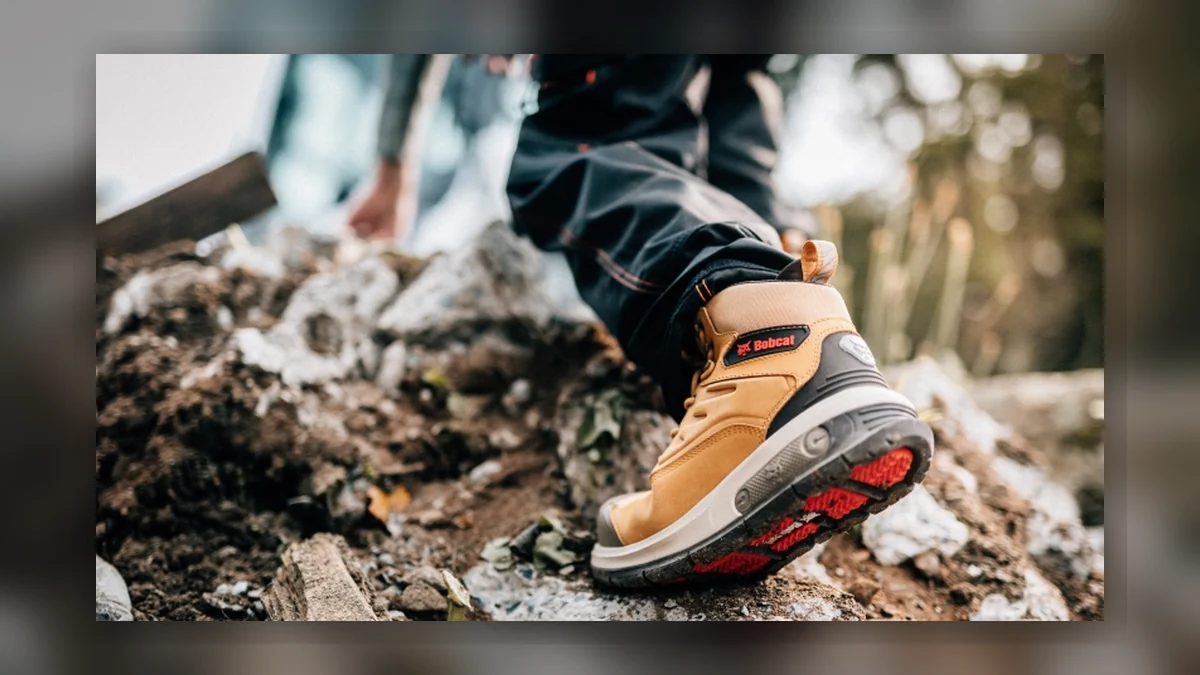
British site conditions change significantly from September onwards. Ground that was hard and dry in July becomes soft and wet within weeks, and the combination of muddy substrates, wet ramps and slick scaffold boards creates a slip and trip risk that is substantially higher than summer conditions. Overland Shoes, the company behind the Bobcat Safety Footwear range, is pointing trades towards appropriate autumn footwear now rather than after the first cold spell arrives.
What changes underfoot in autumn
The practical hazards that increase from September through to March include:
Wet ground. Rain-saturated soil on groundworks and civil engineering sites creates deep mud that challenges boot grip and can pull at laces and ankle support in ways that dry ground does not. A boot that sat comfortably on hard-baked summer ground may not perform in the same way once waterlogged.
Fallen leaves on access routes. Leaves on path surfaces and ramps create a surface as slick as wet grass, and unlike mud they are not always visible as a hazard until you are standing on them.
Condensation. Early morning condensation on metal surfaces, scaffold boards and flat roofing membranes creates a temporary slip risk that disappears by mid-morning but catches trades out who are first on site.
Temperature drop affecting sole flexibility. Some sole compounds stiffen in cold temperatures, which can affect grip performance on smooth or wet surfaces.
What to look for in an autumn/winter site boot
Waterproofing is the most immediately useful feature. A boot with a waterproof membrane keeps feet dry through wet grass, puddles and intermittent rain on site, which directly affects how long a tradesperson can work comfortably. Cold wet feet cause fatigue faster than cold dry feet.
Oil and slip resistance. The HSE's slip potential scale (SRC rating for boots) covers both dry and wet slip resistance. Boots with a high SRC rating are tested on both ceramic tile with a contaminant and steel with a contaminant, giving a more complete picture of wet-surface performance than single-condition testing.
Ankle support. Soft ground, uneven surfaces and the fatigue of longer working days in wet conditions increase the risk of ankle roll. Boots with a higher leg cut and robust ankle padding reduce that risk.
Insulation. Once ground temperatures drop, warmth matters for standing or crouching on cold concrete or stone for extended periods. Some insulated boot options use measured warmth ratings (often expressed as comfort temperature in degrees Celsius for a wearer at rest).
Bobcat Safety Footwear
Overland Shoes' Bobcat range is sold through trade and safety PPE channels. The range includes waterproof, insulated and slip-resistant options targeted at UK trades, and is distributed through builders merchants and personal protective equipment suppliers.