
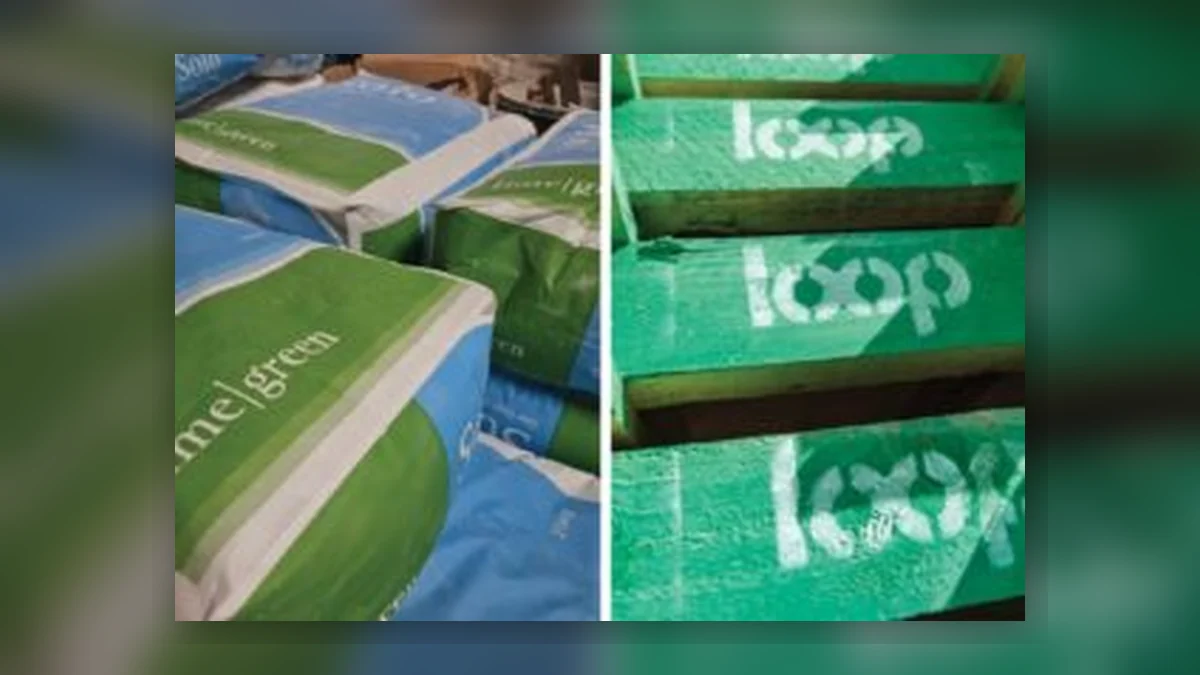
Lime Green, the Shropshire manufacturer of lime mortars, plasters, renders and natural insulation systems, has signed up to The Pallet LOOP's reusable green pallet scheme. Its products will move onto LOOP's distinctive green pallets, with customers able to return them through LOOP's nationwide collection service.
On its own this is a routine supplier announcement. The number underneath it is not: LOOP says more than three million of its pallets have now been issued, £1.5 million has been paid back into the construction industry — and £8 million remains available and unclaimed.
How the PayBack actually works
LOOP pallets are built to be recovered, repaired and reissued rather than broken up or binned after a single journey. Anyone receiving goods on a green LOOP pallet can book a collection through LOOP's nationwide service and receive £2 to £4 per eligible green pallet returned.
That is the part most sites are still leaving on the table. On a decent-sized refurbishment or retrofit taking regular material deliveries, a stack of thirty green pallets at the back of the compound is £60 to £120 — money that currently gets skipped or, worse, paid to have removed as waste.
The distinction that trips people up: the PayBack applies to LOOP's green pallets specifically, not to any pallet on site. LOOP pallets are colour-coded green precisely so they are identifiable across a mixed delivery yard. Standard white pallets from other suppliers are outside the scheme.
Why Lime Green in particular
Lime Green was founded in 2002 and is based near Much Wenlock in Shropshire, manufacturing lime mortars, plasters and renders plus natural insulation systems and specialist repair, renovation and retrofit products.
That customer base is a useful fit for a returnable pallet scheme. Lime and natural insulation work concentrates in heritage repair, conservation and deep retrofit — project types that tend to run over longer durations from a fixed compound with repeat deliveries, which is exactly the profile where accumulating pallets for a single collection is practical. Compare that with a fast-turnaround new-build plot where deliveries land and the wagon leaves.
James Ayres, Co-founder and Operations Director at Lime Green, tied it to the company's product positioning — materials designed for healthier, longer-lasting buildings, with the supply chain treated as part of the same question. Dan McKane, Business Development Director at The Pallet LOOP, called the switch a significant commitment and pointed to the customer-side PayBack as the tangible benefit.
The bigger picture for the trade
Lime Green joins a growing list of building materials manufacturers on the scheme, which now includes major names across plasterboard, cement and insulation. The direction of travel is towards LOOP pallets becoming a routine sight in merchant yards and on site rather than an occasional one — which makes the practical question for contractors less "should we join" and more "do our site staff know to separate the green ones".
Three practical points if you want the money:
1. Segregate green pallets at the point of delivery. Once they are in a mixed stack destined for the skip, the value is gone. 2. Book the collection, don't wait for a delivery driver to take them. LOOP runs its own nationwide recovery service. 3. Tell whoever manages your waste. Pallets going out under a general waste contract are being paid for twice — once in disposal cost, once in forfeited PayBack.
Watch for: LOOP's next milestone figures, and whether the £8 million unclaimed pot narrows as awareness improves. Our earlier coverage: The Pallet LOOP's two-year figures and what circularity means on site.
---